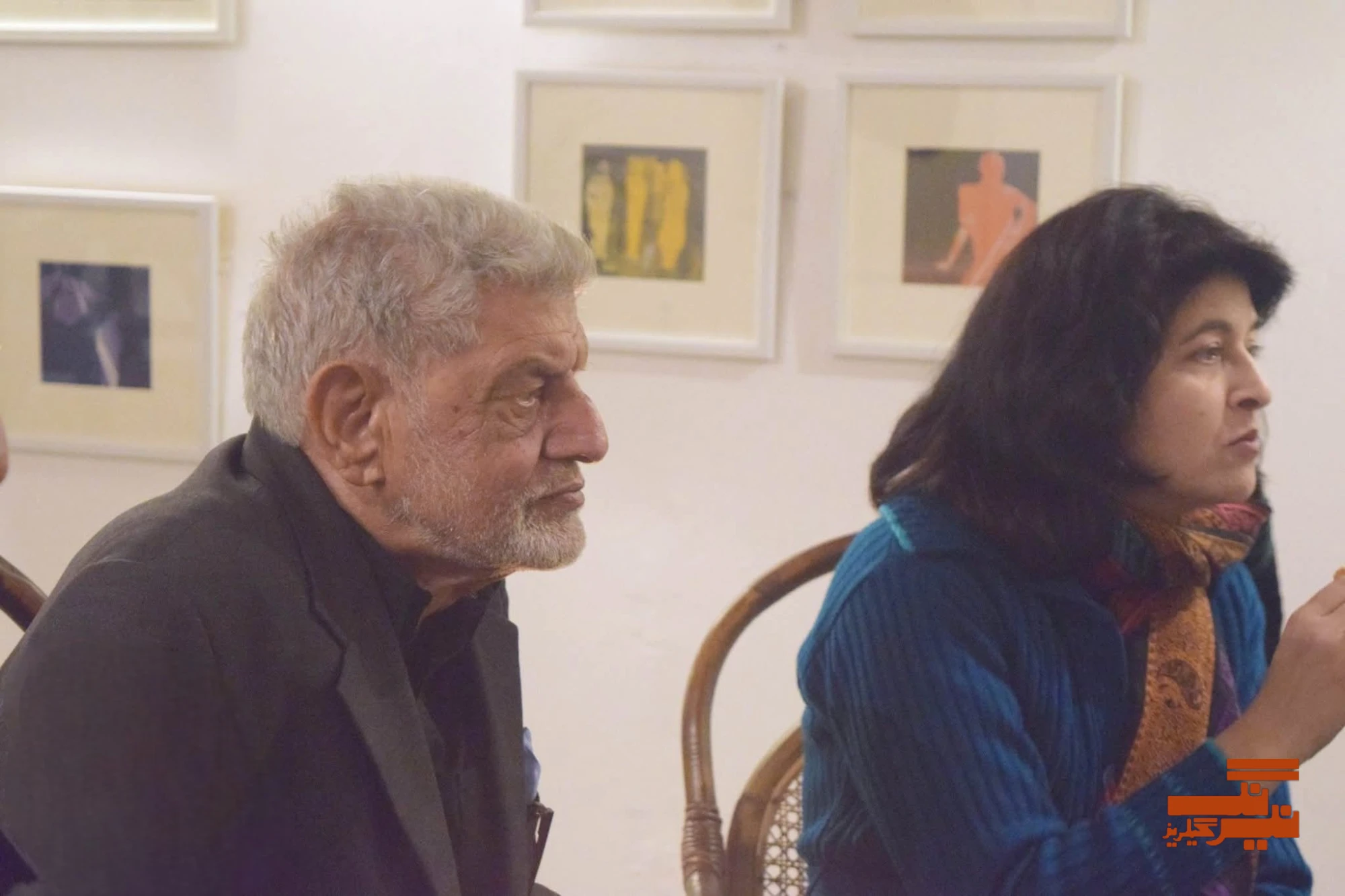
Remembering Allah Bux
There are people whose names continue to reverberate over the culturally collected memory of South Asia. Allah Bux is one among them. He did not just paint figures or landscapes. He painted the feeling of civilization itself – the serenity of village life, the lyricism of rural celebrations, and the visual poetics of a subcontinent with the life, heart, culture, and memory attached to the soil. Nairang Gallery, which recalls its heritage from the literary and artistic temperament of Lahore, remembers Allah Bux, who reminds us that a time existed in the past when beauty and memory were inseparable and when art was a tribute to the culture of living.
Having said that, Allah Bux is not remembered simply as a nostalgic artist who painted the scene of idyllic village life, either. He is remembered because of his contribution to the aesthetic language of the region. As the canvas of the past, he is important because of his transformation, turning marginal life into a good aesthetic form. The greatness of Allah Bux lies in this transmutation.
He is remembered, among many other reasons, because he was not only a great observer, but he was also an expert in the technical aspects of painting. But as for Lahore and its lounges, Baithaks, Nairang Baithak, and Nairang Gallery – the mind-teasers, the intellectuals, the writer painters, and the memory keepers who keep these traditions alive through poignant Eulogues coming to remember Allah Bux is not because he is obsessed with a romanticized image of past village women or musicians, but because we remember Allah Bux because we remember the way he remembered the world. Recollecting Allah Bux is, therefore, recollecting the earlier, slower way of approaching the world to see.
Allah Bux transformed rural life into a lyrical visual language, preserving atmosphere, memory, and cultural continuity through his paintings.
Background information and personality
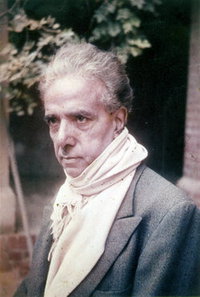
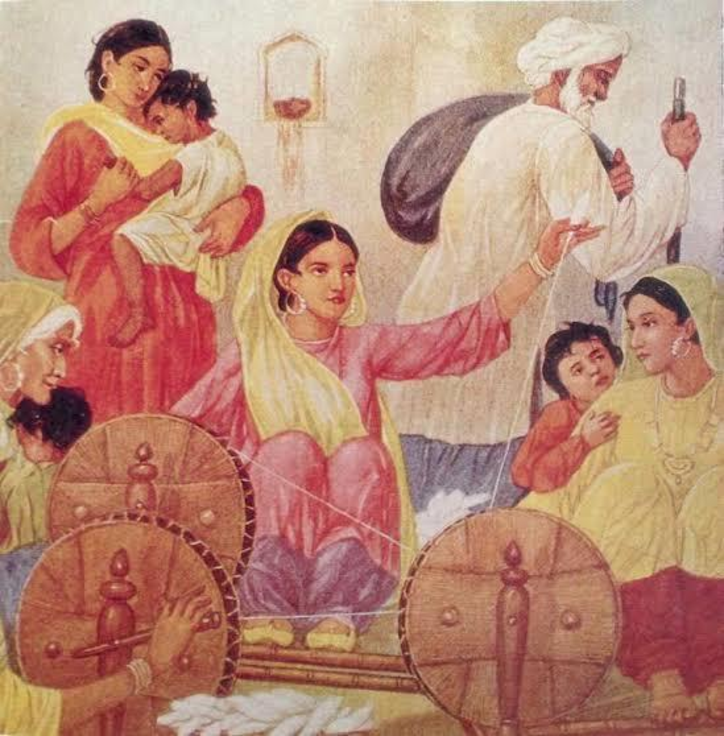
Allah Bux, a painter, was one of the more recognisable artists of the subcontinent in the early twentieth century and was particularly admired for scenes of rural life that were both representational and dreamlike. He depicted the Punjabi and wider Indo-Muslim social worlds not in the tongues of brutal realism but in a softened and affectionate register. This gave his work immediate popular appeal as well as a lasting cultural value.
Allah Bux worked at a time when there were many competing currents in art in South Asia – academic realism, regional traditions, colonial institutions, and the rise of nationalist aesthetics. In that context, he chose to remain close to the human scene, not as distant myth opaquely distant from us, not as purely urban modernist anxieties, but as women at biennial wells, lovers in gardens, musicians in repose, caravans, village pathways, and procession of bagpipes. Allah Bux re-drew these images more often for reasons that were not simply of convenience but for a commitment to visualise a shared cultural inheritance.
In personality, as reconstructed through the memory of his art, we felt a sensitive man of lyric inwardness and a particular love of atmosphere. I have felt Allah Bux in the canvases who listened to the grace of things, not shouts, and who persuaded through mood,d not colour.
The culturally relevant contribution of Allah Bux’s work is that he was a painter with an eye towards shaping cultural memory. He never painted the village as simple geography but as a stage on which customs, labour, feminine identity, companionship, music, ic and seasonality were enacted, all of which offered us a sharpened but gentle reflection on our daily selves.
This quality is very important for us when we think about the aesthetic context of Lahore. Lahore has always been a city in which words converse with images: the mehfil, the mushaira, the studio, the café, the baithak. In such an environment, visual art is almost always bound up with the rest of the emotional life of culture. Allah Bux’s paintings are in this tradition. They are pictorial, indeed, but also narrative. They have the soft quality of a nazm, the reverie of an evening raga, the warmth of a remembered word.
His painterly diction also popularized an art pattern that was both accessible and articulate. He had no taste for obscuring art to make it ‘serious’: he was serious about beauty. His sensual rendering of women and pastoral settings gave a beauty that audiences could put themselves into. This quality as a socially democratic aesthetic explains in part why his art continues to enjoy such wide renown.
In the same way that a good prose writer paints atmosphere, Allah Bux painted it. The horizon in his paintings does not seldom show land, but it does seldom show anything but land. His figures are not crowded into every available space to show his skill at depicting the human form. They are allowed to breathe. This is one element that contributes to his meditative quality paintings.
Allah Bux and aesthetic memory
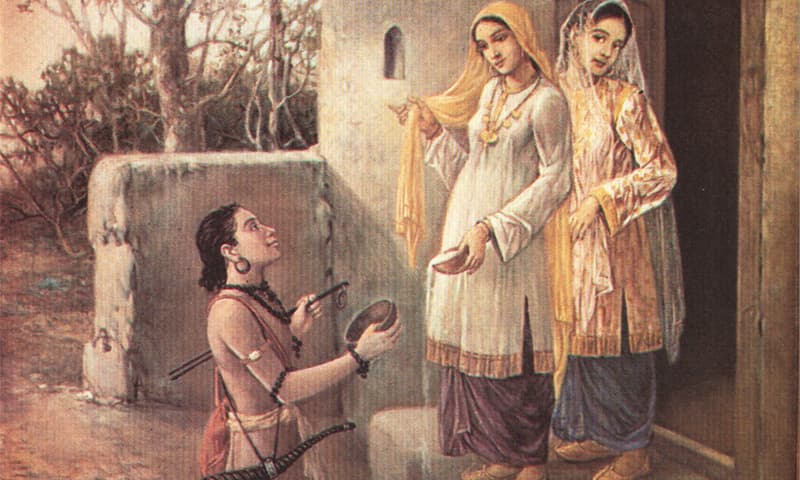
When you think about what makes Allah Bux’s paintings special, you should look beyond their subject matter. Rather than archiving the world’s changing social condition, and everything it is composed of, he evaporates time. He shows us a world in which motion is slowed, where gestures carry tenderness and everyday beauty glows. It is neither documentary time nor remembrance. It is a world of preserved memory held in affectionate custody.
In terms of cultural history, learning to create aesthetic time in the post-independence era is a valuable skill. In a century full of migration and displacement, those who created aesthetic memory preserved that part of our culture that has never dissolved. Allah Bux did not archive history, events, or dates. He achieved tone. A dupatta, dust, a crowd gathered under a tree—all became in his hands an emblem of enduring things in a city in flux.
His work can also be read as the visual pre-service of loss before loss has fully announced itself. Many of these painters were documenting regional life at a time when inherited ways of being were showing their strain under modernity. That may be why contemporary viewers continue to experience his paintings with unusual emotion. They are indeed beautiful, but they are also full of the anxiety of what they enshrine.
Allah Bux holds an important place in the South Asian art history as a painter artist for whom there was no sacrifice of seriousness because of popular appeal. He is part of that elusive group of artists whose work is lovable by the general public, and which should still be subject to long-term cultural contemplation.
Literary and Artistic Significance
There is a literary quality to Allah Bux that makes us think of writers who made landscape into a mood. His paintings are like visual essays on longing, repose, and belonging. If there is something magical in literature, it is the art of constructing worlds through suggestion. Allah Bux, with his line, color, and composition, had constructed his literary worlds. He did not just depict culture, he interpreted it.
To take an example of this, his women are not just decorative. They are more than that; they play a central role and carry the faint quality of dignity and inwardness. Their pastoral settings are not simply empty worlds; they are images that mix labor, ornament, and emotions. Such representational aesthetic celebrated a refined literary vernacular that was more or less the language, and more precious in its artistic execution.
This is significant to Lahore’s literary camps, which have always revered not production per se, but the sensibility. The best cultural personalities associated with the city have done exactly this. Allah Bux did exactly this. He made us see the social and rural life as worthy of reverence.
In such terms, his paintings are as close to a kind of cultural journalism. They are keen to texture, sympathetic to life, and wise about deeper meanings.
Reflection and Remembrance
To remember Allah Bux today is to ask what hangs on after a civilization in its images. While the building may crumble, the speech may change, the habits may become oolongs, art is patient. His canvases still can send us back to a gentler syntax of being, one in which people were still close to their land, to the season, once in decent adjust with them, to each other. That world was never as simple as our memory claims it to be, but to produce him too raw is art not obliged to do. Sometimes its job is to rescue harmony out of the noise of history.
And there is something very human about the afterlife of Allah Bux’s art, too. Our first reaction to it is not to theorise but to recognise. We feel that we have known such light, such attire, such pauses, such roads. And that is no mean feat. It is the birthmark of an artist who painted from inside the culture, not from on top of it.
The Nairang Gallery Tribute
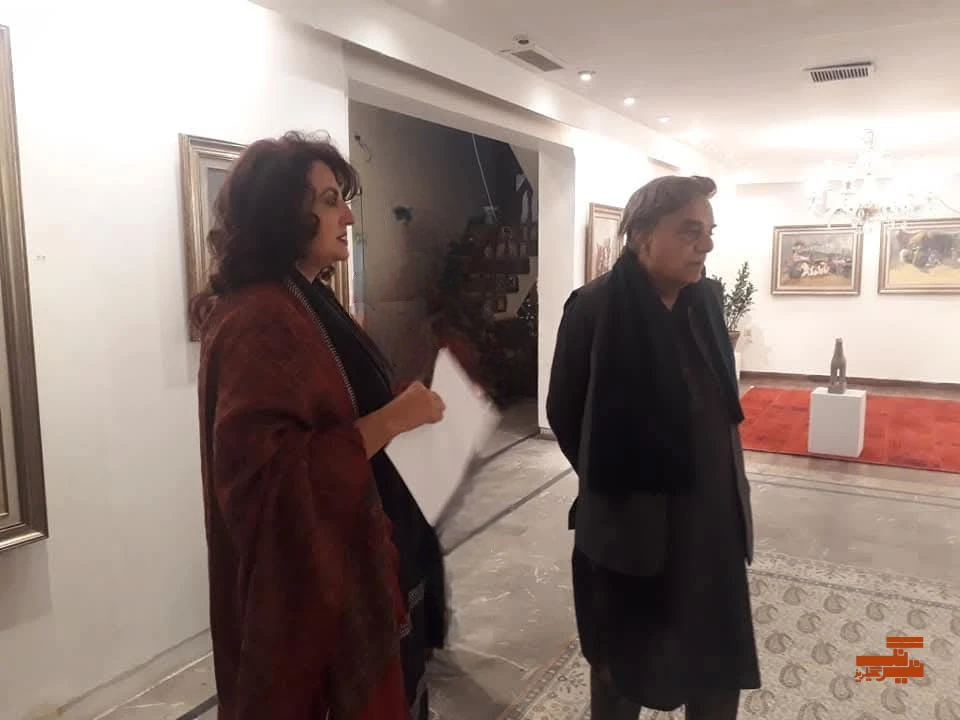
The environment in which to recall Allah Bux is the Nairang Gallery, where we don’t just show but love the continuity that Lahore’s artistic heritage promises. The gallery’s literature, visual art, dialogue, and heritage are joined in the world Allah Bux creates. His canvases join that very wide, generous folk memory of art’s place in culture.
To celebrate Allah Bux in the ambience of Nairang Gallery is to celebrate the sensibility that souléd so much of Lahore’s cultural life: refinement without vanity, beauty without excess, and nostalgia without sentimentality. In a contemporary world of speed and constantent fragmentation, things like these are more precious than ever: reminding us that culture isn’t kept alive by novelty but by return, return to the masters, return to atmosphere, return to everything that had once taught us how to feel.
Nairang Gallery’s tribute to Allah Bux reinforces its role as a custodian of Lahore’s artistic and literary patrimony. By revisiting the works of such figures, the gallery participates in a cultural act of continuity. It reminds us of the dialogic nature of the present, the canvas, the text, the city, the memory.
Conclusion
Allah Bux is the type of painter whose art goes beyond the frame. It has survived not simply because it is eye-pleasing, but because it has an emotional resonance with the region’s cultural imagination. Indeed, he painted pastoral pastorality, yes, but also belonging. He painted women and villages, yes, but also grace. He painted landscapes, yes, but indeed also silences.
For those who pored over NairangGallery.com, and for all who followed Lahore’s wider artistic world, Allah Bux serves as a reminder that art can hold what history wants to unsettle. His canvases still exhale warmth, grace, and stillness. In remembering Allah Bux, we do not simply look backwards. We recover a way of seeing that can still flesh out the present.
Frequently Asked Questions
Who was Allah Bux?
Allah Bux was a celebrated painter of the South Asian subcontinent, known for his evocative depictions of rural life, cultural atmosphere, and pastoral beauty.
What is distinctive about Allah Bux’s paintings?
His paintings are marked by a gentle, lyrical quality, where everyday scenes are transformed into expressions of mood, memory, and cultural continuity.
Why is Allah Bux important in South Asian art?
He played a significant role in shaping a visual language that made rural life aesthetically meaningful while remaining accessible and emotionally resonant.
How does Allah Bux relate to Lahore’s cultural environment?
Although his work reflects a wider regional sensibility, Lahore’s literary and artistic culture continues to engage with his legacy as part of its broader aesthetic memory.
Why do Allah Bux’s works still feel relevant today?
His paintings preserve a sense of atmosphere and human connection that continues to resonate in a time marked by rapid change and cultural distance.
How to Experience Allah Bux’s Paintings
- Observe the atmosphere before focusing on individual figures.
- Notice how space, distance, and silence are used.
- Approach the work as memory rather than documentation.
- Allow the emotional tone to unfold gradually.
- Resist the urge to interpret too quickly; let the image remain open.