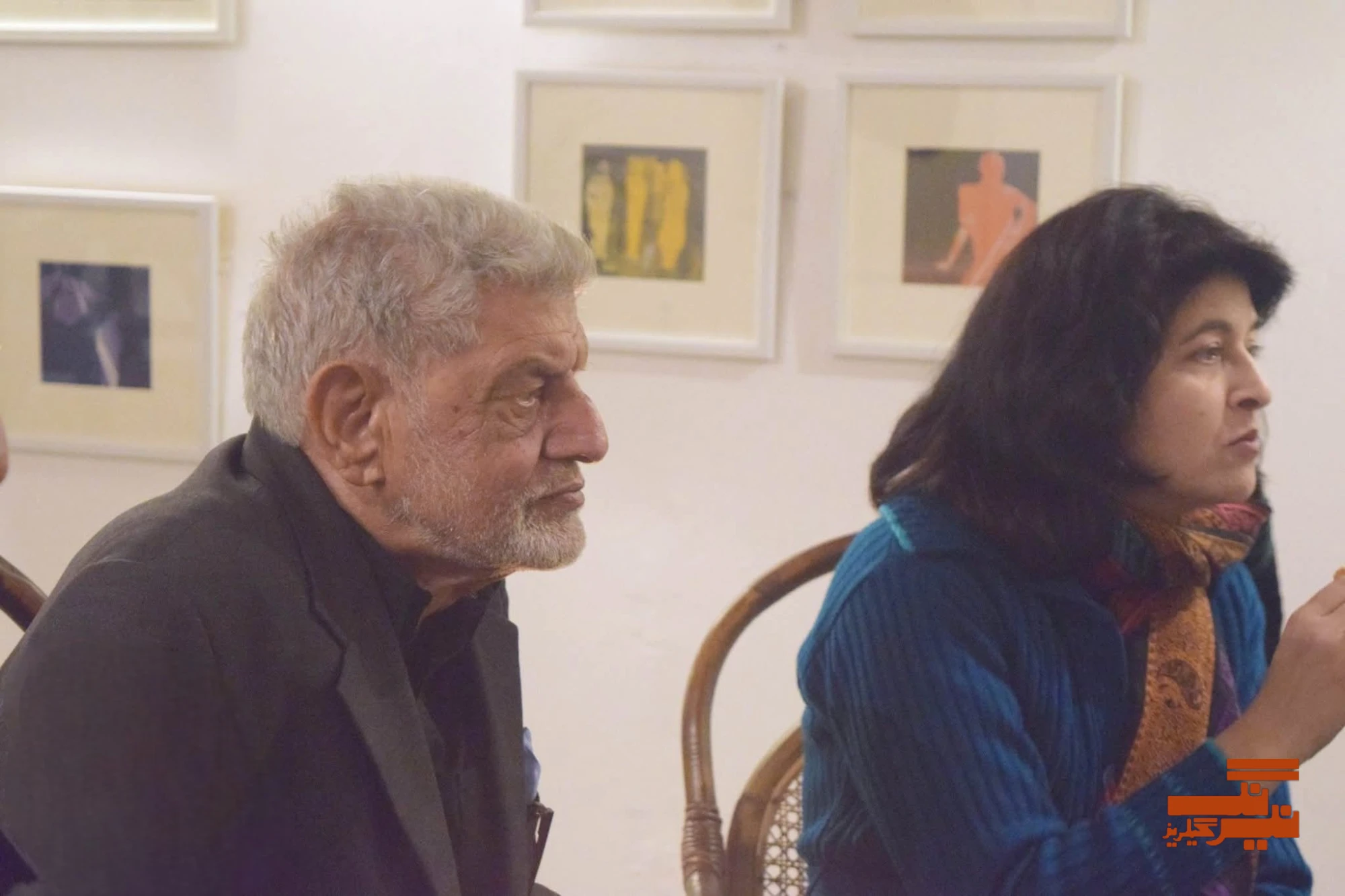
An Ode by Nairang Gallery to the Artistic Soul of Lahore
Abdulrehman Chughtai, Lahore’s most celebrated painter, was a visionary artist whose poetic works captured the soul of an entire civilization. His art does not exist separately from the literary and emotional tapestry of the subcontinent; rather, it flows like a line of poetry illuminated by moonlight. At Nairang Gallery, a space where discussions about art, literature, and memory are infused with the spirit of old Lahore, we continuously celebrate the name Abdulrehman Chughtai, symbolizing grace, inner beauty, and civilizational splendor.
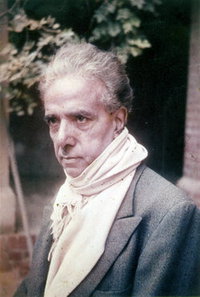
Abdul Rehman Chughtai shaped a poetic visual language that continues to define Lahore’s artistic and cultural imagination.
Introductory: Abdulrehman Chughtai and the Soul of Lahore
Discussing Abdulrehman Chughtai is to explore the essence of Lahore, a city that knows how to dream in color. He was not merely a painter of figures but rather a creator of emotion, mood, and cultural heritage. The figures in Chughtai’s works, often serene and delicate, remind us of a blend of miniatures, Mughal romance, Persian lyricism, and a modern hope. His art serves as a poetic remembrance of beauty.
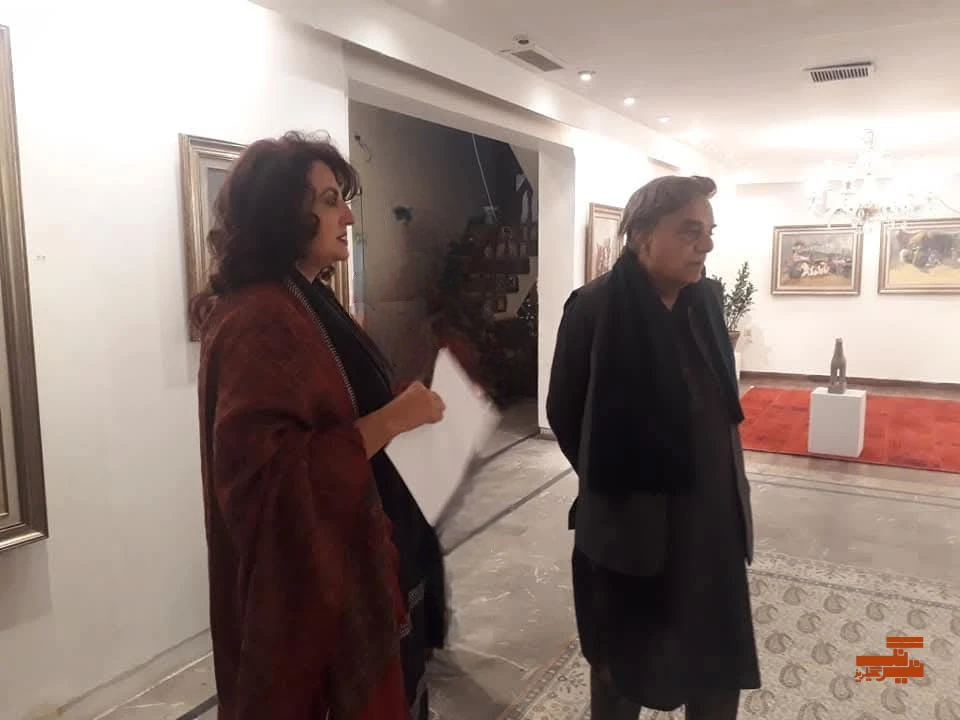
Abdulrehman Chughtai is well-suited for a cultural space like Nairang Gallery, which is dedicated to Lahore’s literary and artistic heritage. He was one of many creative minds who translated the heritage of historical Lahore into a universally expressive visual language.
Background: The Making of Abdulrehman Chughtai
Abdulrehman Chughtai was born in Lahore in 1897. The city not only served as his birthplace but also constantly inspired his imagination and visual language. During this period, South Asian art sought new identities under colonial modernity. While academic realism had made its mark, many artists and intellectuals were seeking forms that could revive indigenous aesthetic sensibilities while resonating with contemporary times.
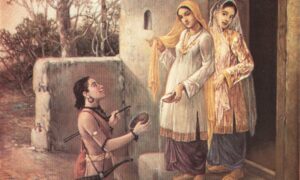
Chughtai answered this call with a unique synthesis. He drew from Mughal miniatures, Islamic decorative arts, Persian manuscripts, and the Bengal School, yet his work was unmistakably his own.
Chughtai was not a mere copier of old styles or a passive follower of trends; instead, he developed a profoundly individual mode of expression characterized by sweeping lines, subtle tonal harmonies, elongated forms, and a dreamlike quality of emotion.
He favored a visual form where restraint was more valued than spectacle, and suggestion more alluring than ostentation. In this manner, he became one of the most distinctive and celebrated artists of the subcontinent.
Artistic Contribution: A Painter of Poetry, Memory, and Grace
The significance of Abdulrehman Chughtai lies in the world he created on paper and canvas. His artworks are rooted in literary, romantic, or historical subjects. They convey the nuances of Urdu poetry, the Indo-Persian narrative tradition, and the essence of courtly civilization, while also avoiding the traps of nostalgia. His works resonate with the idea that the memories they inspire should be solid and enduring.
The women depicted in his paintings exude dignity and introspection. They are not mere objects of decoration; instead, they evoke mood. Their forms suggest mystery rather than explicit content, prompting the viewer to feel rather than see. Chughtai’s art possesses a literary ambiance—a dimly lit, abstract quality that evokes a sense of yearning.
He also contributed to the redefinition of South Asian painting in the modern era. At a time when artists were often torn between Western academic styles and traditional forms, he illustrated that these two could coexist. This perspective challenged the notion that modernity was exclusively European in its imitation.
Through this, he instilled a sense of cultural confidence that remains relevant today.
Abdulrehman Chughtai and Lahore’s Literary Culture
Lahore has always been a city of architecture and marketplaces, as well as a hub of conversation. Its salons, publishing circles, tea houses, and baithaks fostered a world where art and literature were never short of dialogue. Chughtai naturally embodies this essence. His paintings evoke conversations with poets, storytellers, and thinkers. They echo the softness of a ghazal, the restraint of classical dastan, and the melody of dusk.
This connection is why his legacy resonates so deeply with Nairang Gallery. These spaces do more than host exhibitions; they curate an atmosphere. They preserve the older tradition of culture, fostering community, reflection, and the exchange of ideas. Chughtai’s work similarly demands a contemplative approach; it encourages us to savor rather than rush through his art. His profound relationship with literature drew inspiration from themes that were romantic, melancholic, and devotional.
There is a philosophical tenderness in his work that is disavowed today. So his work is almost revolutionary in that regard. In the history of art, he was a significant figure because he belonged to a group of Muslim and South Asian artists involved in self-representation in the twentieth century. He mattered in the world of literature, because his artworks don’t utter; they rustle and speak. In Lahore, he mattered because he took an inward refinement and transformed it into what we now see.
Today, his artworks are still reproduced in books, hanging in homes, displayed in galleries, and etched into cultural memory. But their life is attentive only when we pause before them, when we listen to their silence. Few artists have been as generous with meditation as he was.
Chughtai Is Still Here, And For Good Reason
Each generation must look to some artists for guidance, not because they have clear solutions but because they uphold a standard of feeling. Chughtai is such an artist. When we hear him in the story of the speedometer, he shows us how to slow down. In a world overrun by noise, he provides inwardness. In a nation overwhelmed by slogans, lest we forget, this is about form, temperament, and imagination.
But to remember Chughtai is to remember a Lahore that had nuance, a Lahore that understood beauty. His artworks belong to that noble heritage which cannot be preserved by stone. It is preserved through taste, conversation, and reverence.
What is rich about his paintings is that they are alive. They are not fossils from a dead time. They reflect our own restlessness for wholeness, grace, and continuity. That is why he is a true artist. He lived beyond his time because he touched on the unfinished aspects of ours.
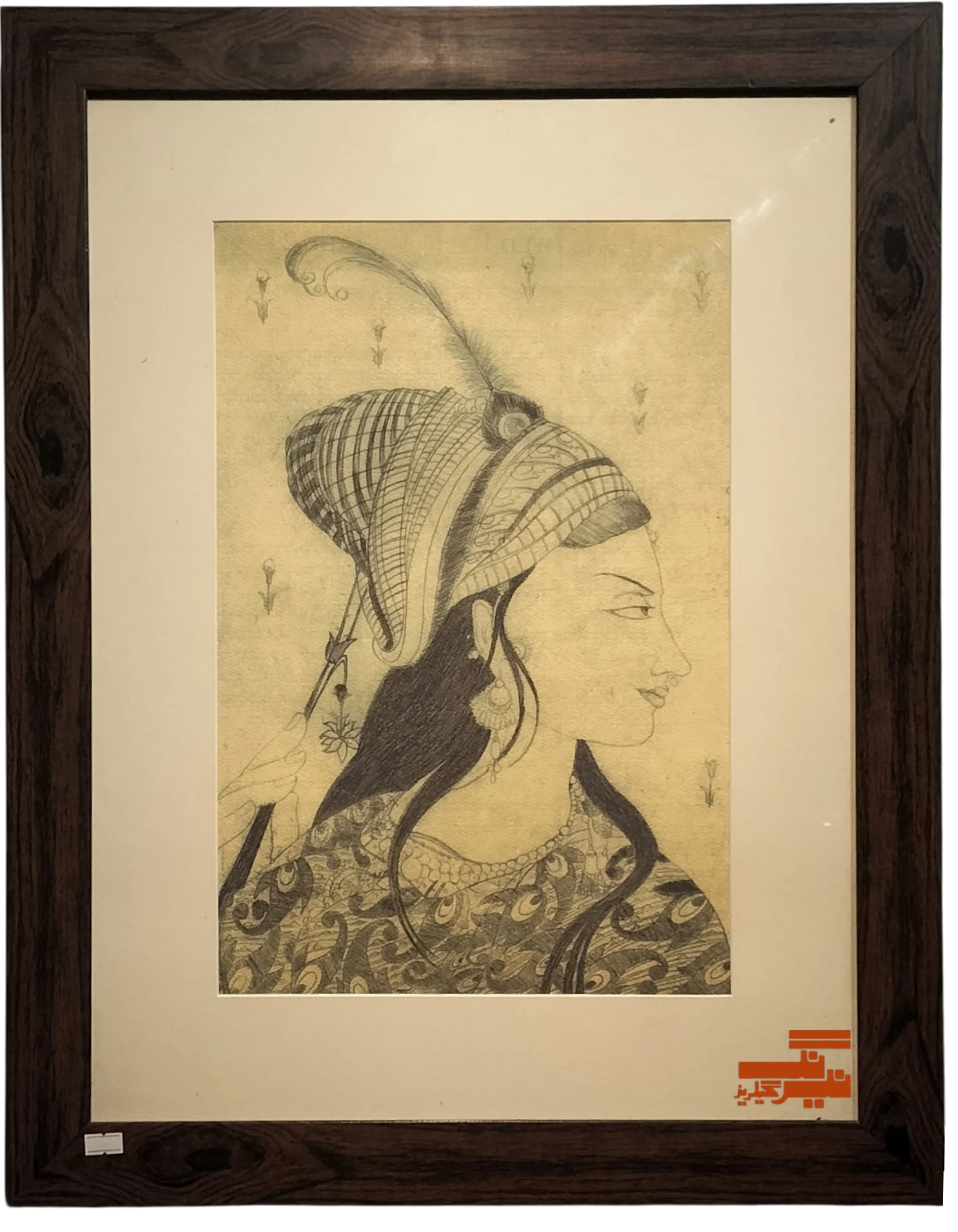
Nairang Gallery Tribute
Any tribute from Nairang Gallery to Abdulrehman Chughtai is an affirmation of cultural lineage — a Lahore that merges painting, poetry, music, and memory. To invoke him here is to place him where he truly belongs: among those rare figures who made Lahore not merely a city, but a civilization.
Frequently Asked Questions
Who was Abdul Rehman Chughtai?
Abdul Rehman Chughtai was one of the most distinguished painters of the South Asian subcontinent, known for his poetic visual language and synthesis of classical and modern aesthetics.
What is Abdul Rehman Chughtai known for?
He is known for his delicate, flowing lines, Mughal-inspired compositions, and paintings that evoke literary, romantic, and cultural themes.
How did Chughtai influence South Asian art?
He developed a unique style that bridged traditional miniature painting and modern expression, helping shape a distinctly South Asian visual identity in the twentieth century.
What is Chughtai’s connection to Lahore?
Born and based in Lahore, his work reflects the city’s deep engagement with literature, aesthetics, and refined cultural expression.
Why is Abdul Rehman Chughtai still important today?
His work continues to resonate for its emotional subtlety, cultural depth, and ability to translate heritage into a timeless visual language.