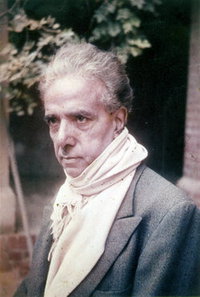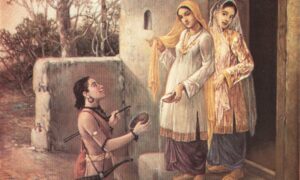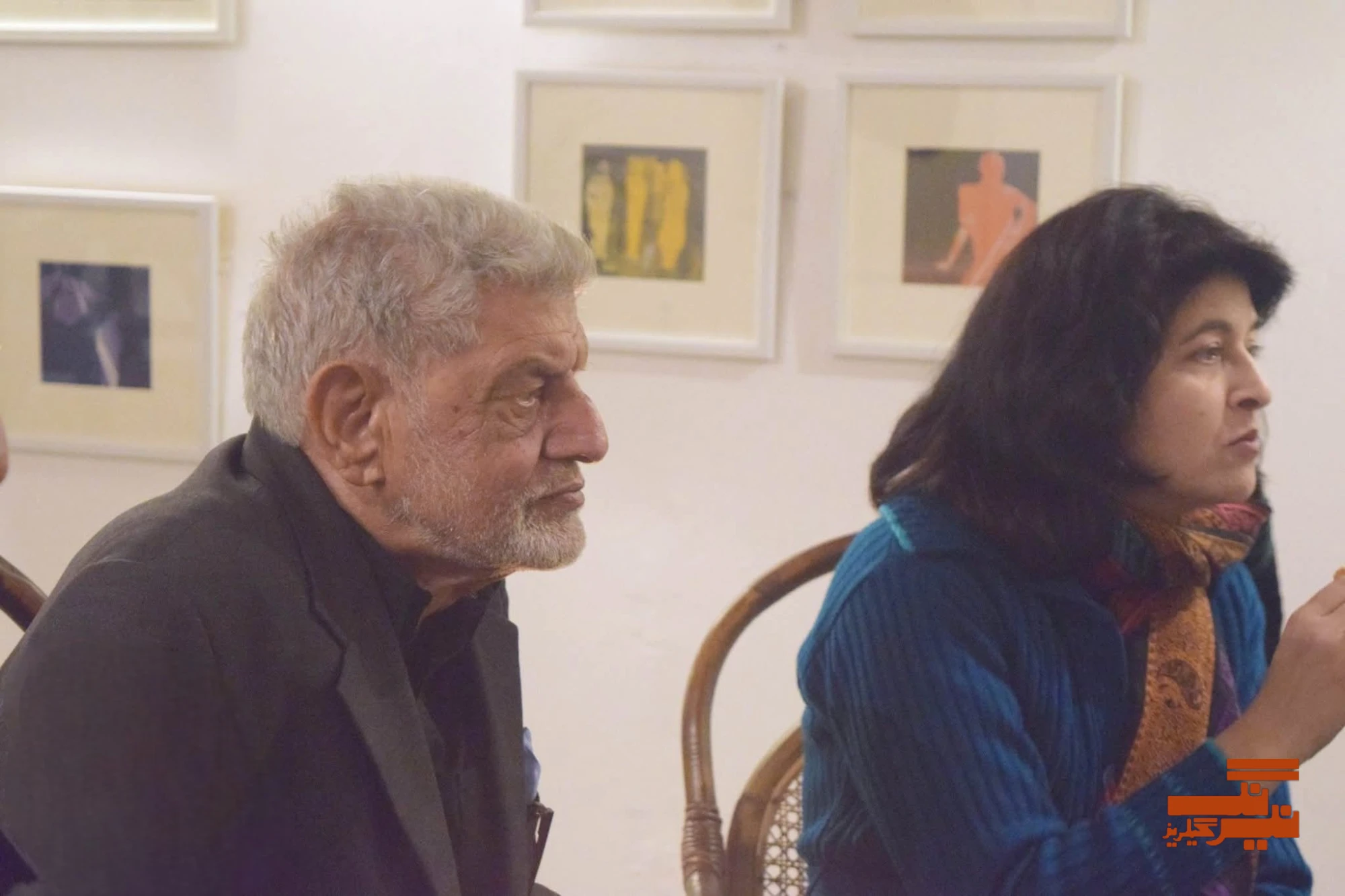
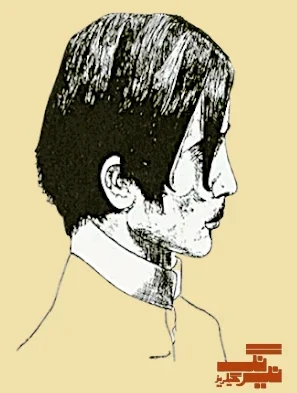
In the artistic memory of South Asia, Sadequain is like a flame, drawn in ink, restless, luminous, unconfined to a single frame. He was not, however, a painter or a calligrapher, but a cultural event, a temperament in motion, a mind that transmuted anguish, grandeur, and metaphysical longing to line. For Lahore, a city in whose streets language, image, and conversation have long been companions, Sadequain is more than a celebrated name. He is part of that rare association of artists who do not merely paint walls, but increase the inner weather of a people.
Nairang Archives 2026.
Introduction
Writing about Sadequain is to enter a space where poetry and painting are not separate disciplines but a single breath. His art emerged from an era of profound ideological turmoil, rapid urban transformation, intense literary ferment, and a civilization’s urgent questioning of its own identity and direction.
But he was never merely a product of his time. Instead, he absorbed history whole and returned it transformed — rendered in a visual language that was at once deeply rooted in the past and strikingly alive to the modern. In the spirit of Nairang Gallery, where Lahore’s artistic and literary wealth is kept not in the hush of museum corridors but in open, living conversation, this tribute honours Sadequain as a creator whose line continues to move through our cultural consciousness like a current that has never ceased.
Sadequain transformed painting and calligraphy into a powerful visual language that continues to shape Pakistan’s cultural and artistic identity.
Background and the Making of an Extraordinary Artist
Born in Amroha in 1930, Sadequain Ahmed Naqvi inherited a world of refinement, calligraphic rigor, and literary sensibility. After Partition, like many of his generation, artists and intellectuals, he was shaped by migration, rupture, and the making of new cultural homes. In Pakistan, he became one of the most formidable visual artists of the twentieth century. From the start, Sadequain was distinguished by the tensile force of his imagination. He did not see art as ornament. He saw it as testimony, struggle, and revelation. His figures are elongated, burdened, drawn inward or upward as if the human body were a script of trial and triumph. There is something prophetic in these forms. They do not beg for easy admiration. They demand a witness.
Cultural and Artistic Contribution
Sadequain fashioned several traditions at once. As a painter, he made murals of monumental ambition; he elevated public art to a new register of seriousness and spiritual scale. As a calligrapher, he freed the written word of narrow convention and reconstituted it as architecture, motion and pulse. His Quranic calligraphy is among the most powerful visual achievements in modern Islamic art, not because it is devout but because it is alive with intellectual and emotional energy. Sadequain’s contribution to Pakistani culture is also that he made high art public. He painted for institutions, civic spaces, and collective memory. As such, he challenged the confinement of art to elite interiors. He carried the force of imagination into the national visible life. That alone secured his place in cultural history.
Sadequain and Literary Imagination
There’s always been something literary in Sadequain’s vision: he was attracted to poets, thinkers, and symbols of civilisation. His visual rhetoric seems, at times, to become a dialogue with verse – especially with those traditions of Urdu and Persian poetry that wrestle with destiny, ego, beauty, annihilation, and divine desire. Even when he rendered the human condition in hard, muscular terms, the image seemed to pulse with the cadence of metaphor.
This kinship with literature makes Sadequain all the more resonant in Lahore’s cultural ecology. Lahore has never been one to draw hard lines between the arts. Painters attend and contribute to mushairas, writers speak of colour, and music is stored in memory like a poem. Sadequain’s work simply fits into this ecology. Among the artists in Lahore who remind us that creativity in our part of the world has always been interlinked, he would seem to belong.
Artistic Importance in Lahore’s Cultural Imagination
Sadequain’s reputation, however, is not limited to Lahore. Lahore receives him, though, in a very particular way. We understand intensity. We are intimately familiar with the artistic temperament that is excessive in the best possible way, that has no fear of symbolism, argument, beauty, and contradiction. In our galleries, salons, and baithaks, names such as Sadequain are never simply archival. They come up in recollection, in anecdote, in debate, and in renewed admiration.
His importance also lies in the way that he fearlessly blended classical inheritance with modern expression. He neither abandoned the past nor submitted to it meekly. He wrestled with it, extended it, and made it answer the anxieties of the now. That is why younger generations encounter Sadequain not as a relic of national culture, but as an artist whose vision is startlingly relevant to contemporary concerns of identity.
Reflection and Remembrance
Remembering Sadequain is not a nostalgic exercise. It is a question of what Seriousness in art looks like today. His career is a reminder that the true artist does not simply perfect technique; he/she risks themselves in the making of meaning. There was grandeur in his ambition, but there was also loneliness, defiance, and inward fire. He seemed to be always drawing against oblivion, against mediocrity, against the shrinking of the human spirit.
For this reason, Sadequain still feels close to us. His work has the tension of a life in fierce dialogue with existence. It has the ache of exile, the dignity of labor, and the brilliance of a vision. To stand before his work is to feel that the line can think, that the script can breathe, and that art can still confront us with the vastness of our own unfinished humanity.
Nairang Gallery’s Tribute to Sadequain
At Nairang Gallery, Remembering Sadequain is part of a larger cultural responsibility.
The artistic legacy of Lahore is a continued process of remembrance and retransformation through revival, reflective writing, and public conversation. Since time immemorial, Nairang Baithak was that tradition of generosity where painters, poets, readers, and listeners gather to bring music to life for all ages.
For Nairang Gallery, Remembering Sadequain is also an assertion of being part of the living cultural map of Lahore. It is not a ceremonial remembrance. It is a reminder of continuity. Remembering Sadequain is to remember a vision of art that is intellectually animating, morally confronting, and aesthetically unafraid. Remembering Sadequain is to remember that the artistic heritage of Lahore lives best when it is sustained by institutions such as Nairang Gallery, which brings into conversation the brilliance of the past with the sensibility of the present.
Conclusion
Sadequain lives because he gave shape to forces larger than himself: the memory of civilization, the ache of spirit, the yearning of poetry, and the heroic flare in modern South Asian art. His murals, figures, and calligraphic compositions continue to entertain and to console, to disturb and to illuminate. Remembering him is also a remembrance of Lahore itself.
For Nairang Gallery, it is a remembrance and an invitation, an invitation to look again at Sadequain, to read his lines as one reads a great poem, and to maintain the conversations from which culture takes its luminous grace.
Frequently Asked Questions
Who was Sadequain?
Sadequain was one of Pakistan’s most influential modern artists, known for his powerful murals, expressive figurative work, and innovative approach to calligraphy.
What is Sadequain known for in art?
He is known for monumental murals, elongated human figures, and a distinctive calligraphic style that transformed traditional script into dynamic visual expression.
How did Sadequain influence Pakistani art?
Sadequain expanded the role of art in public life by creating large-scale works for civic spaces and by redefining calligraphy as a modern artistic medium.
What is Sadequain’s connection to Lahore?
While his work spans across Pakistan, Lahore’s literary and artistic culture continues to engage with his legacy through exhibitions, discussions, and cultural remembrance.
Why is Sadequain still relevant today?
Archival documentation of his work continues to resonate because it addresses universal themes such as struggle, identity, and the human condition through a powerful and timeless visual language.
How to Experience Sadequain’s Art Meaningfully
- Spend time observing the line and form before seeking interpretation.
- Notice the relationship between figure, movement, and tension.
- Approach his calligraphy as a visual composition, not just text.
- Consider the historical and cultural context behind the work.
- Allow the artwork to remain open rather than forcing conclusions.