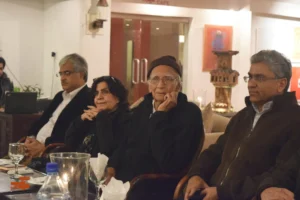
Every city carries certain rooms in its memory — quiet places where conversations once shaped the spirit of an age. In Lahore, a city renowned for its literary temperament, one such place gradually gained recognition as the Nairang Baithak. Long before the walls of Nairang were adorned with paintings and art exhibitions, this space welcomed poets, writers, thinkers, and friends who gathered to talk about literature, culture, and the life of the mind.
These were not formal events planned with schedules or announcements. They were evenings that grew naturally from friendship and intellectual curiosity. In a modest but warm setting, voices of poetry, ideas, and debate filled the air. What began as an informal gathering slowly became a cherished cultural moment in Lahore’s literary life.
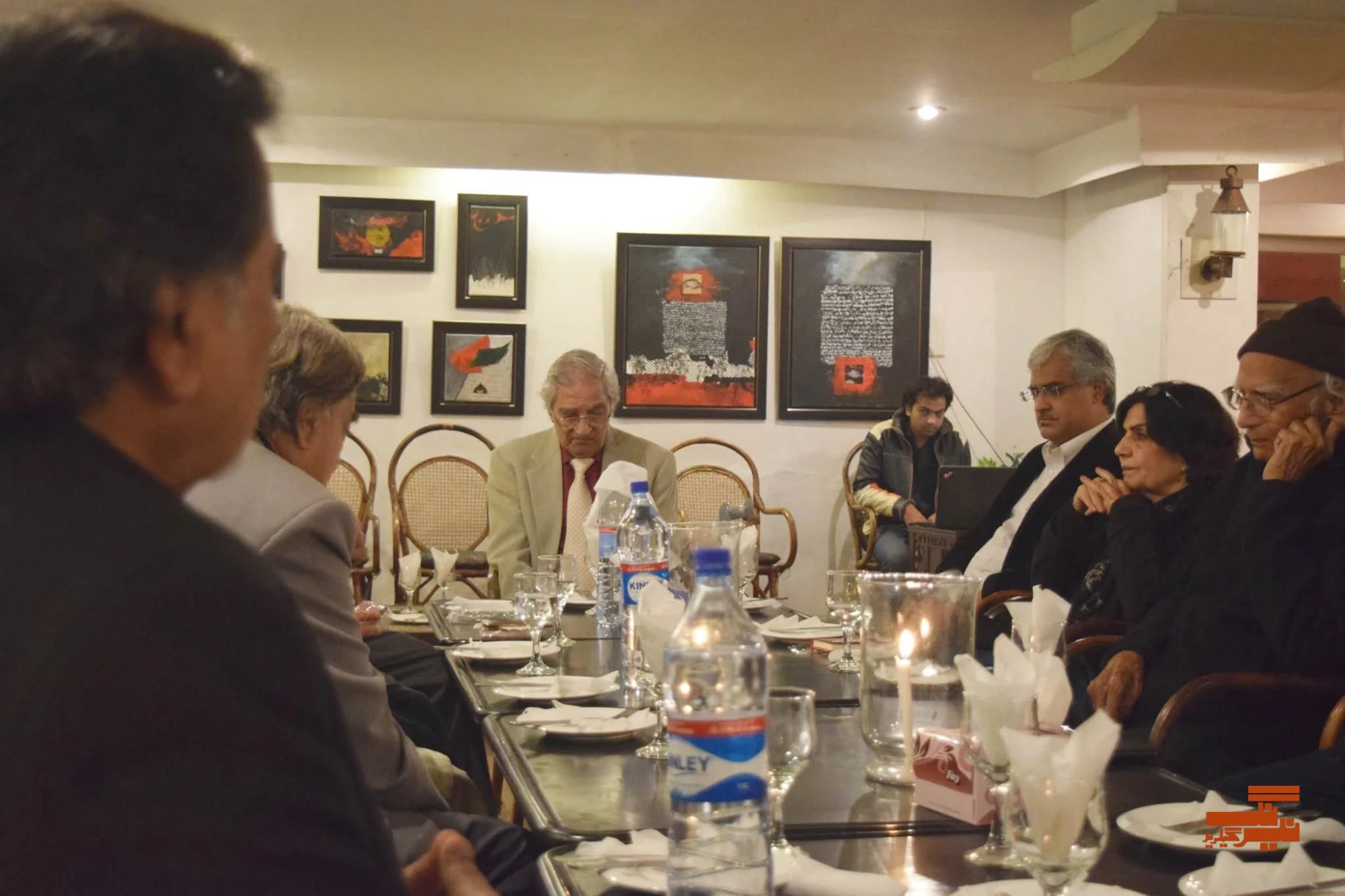
Evenings in Lahore
Lahore has always been a city where literature finds its way into everyday life. From the old coffee houses of the Mall Road to the quiet study circles of writers and journalists, conversations about poetry, philosophy, and society have long been part of the city’s rhythm.
It was within this atmosphere that the gatherings at Nairang began to take shape. As evening descended and the day’s noise softened, writers and friends would arrive — sometimes with newly written verses, sometimes with manuscripts, and often simply with the desire to listen and reflect.
The Beginning of Nairang Baithak
The space that would later become Nairang Gallery was, at that time, simply a welcoming place opened by architect Nayyar Ali Dada to friends from the literary world. Dada himself had always shared a deep connection with literature and culture, and the Baithak emerged naturally from this circle of friendships.
What made these gatherings special was their informality. There was no podium, no stage, no hierarchy. People sat together, spoke freely, and allowed ideas to unfold in their own time. In many ways, the Baithak echoed an older tradition of South Asian cultural life — the intimate assembly where literature and conversation coexist.
The Writers Who Filled the Room
Over time, the Nairang Baithak came to welcome many distinguished figures from Pakistan’s literary world. Among those who passed through its evenings were poets and writers whose words had already become part of the country’s cultural memory.
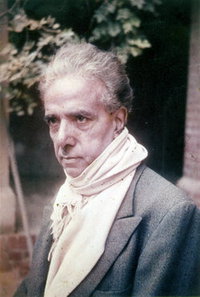
Faiz Ahmed Faiz, whose poetry carried both tenderness and resistance, was among those who shared the space. Ahmed Faraz, with his lyrical intensity, often brought with him the warmth of poetic conversation. The thoughtful presence of writer Intizar Hussain added another dimension, as his reflections on history and storytelling opened deeper discussions about culture and memory.
Alongside them were personalities such as Siddiqa Begum of Adab-e-Latif, Abida Hussain, Nasreen Kasuri, Ayaz Meer(journalist, analyst, columnist), Asima Jahangeer, Faryal Ali Gauhar, Muneer Ahmed Qureshi, better known as Munnu Bhai, Mian Ejaz-ul-Hasan, Dr.Ghafir Shehzad, Saeed Akhtar, Rizwan Azeem, Rashida Raza, Dr.Shahida, journalist and intellectual I.A. Rehman, writer Shahnawaz Zaidi, Masood Ashar, Raza Kazim, Dr.Mubarik Ali, Dr.Mubashar Hussain, Dr.Umar Adil, Qasim Jafri, and several others whose contributions enriched the evenings.
Each brought a distinct voice, yet what united them was the shared pleasure of literature and dialogue.
Poetry, Books, and Theatre
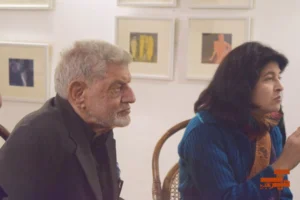
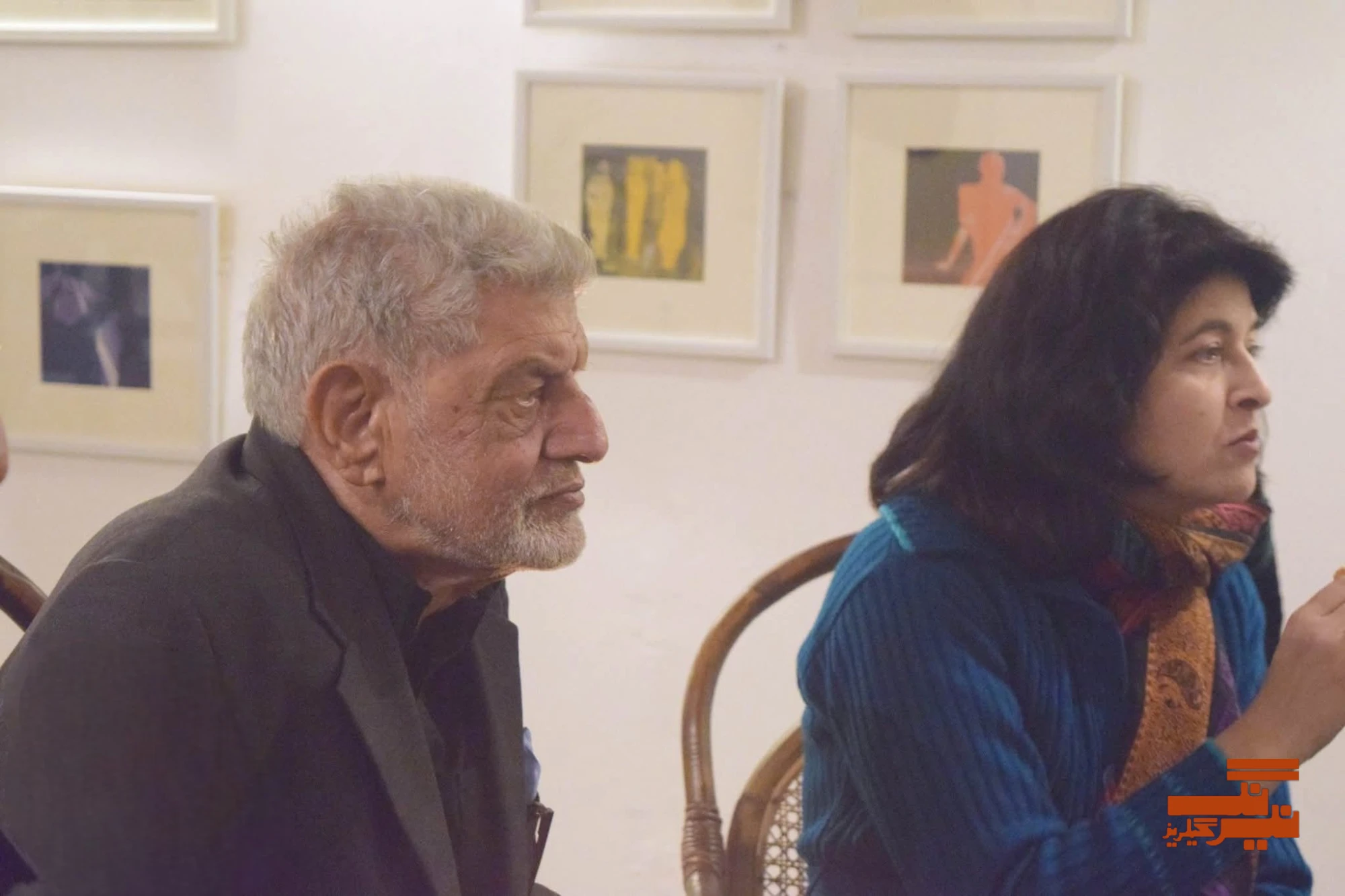
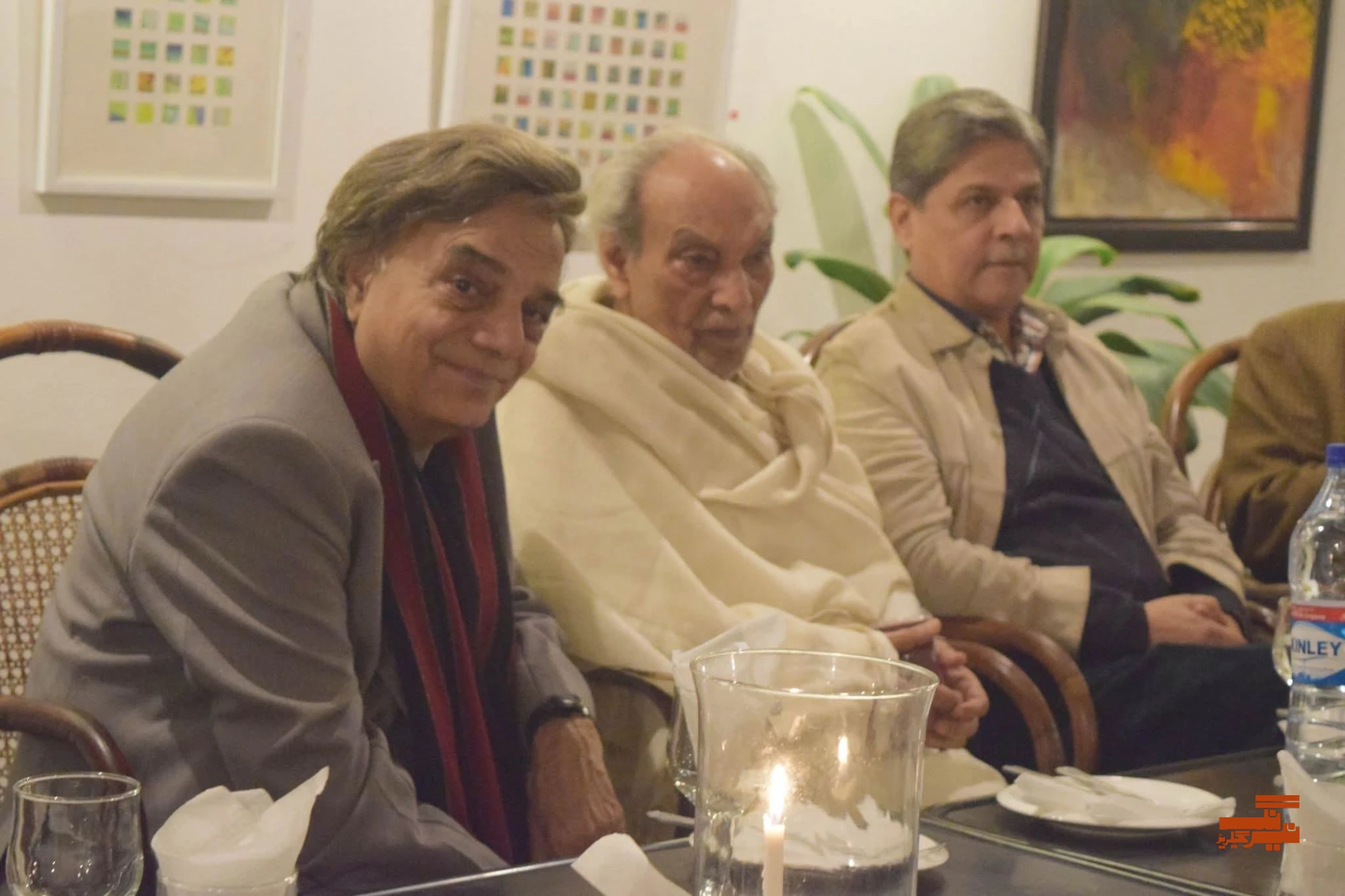
The Baithak gradually became a lively cultural space where different forms of literary activity unfolded. Mushairas would take shape spontaneously as poets recited verses to an attentive circle of listeners. Book launches and literary discussions introduced new works to thoughtful audiences.
On some evenings, the space echoed with rehearsals of Punjabi theatre, where writers and performers explored the expressive energy of language and performance. These rehearsals carried the spirit of experimentation that has always characterized Lahore’s artistic culture.
In those moments, the Baithak was not merely a room — it was a living forum where literature was spoken, heard, debated, and celebrated.
From Literary Baithak to Art Gallery
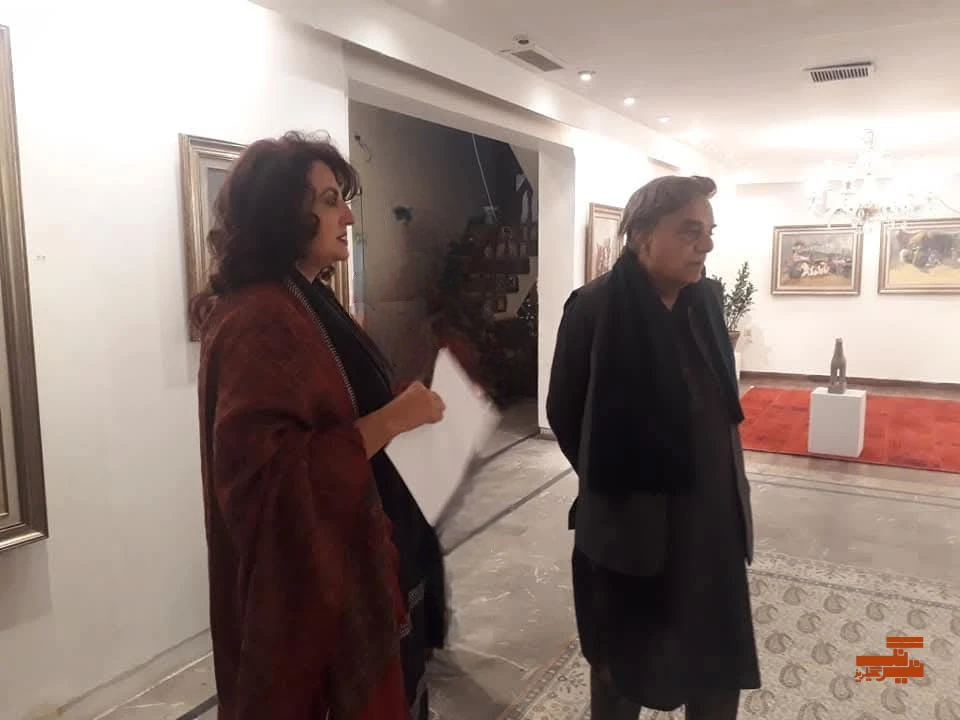
With time, the character of the place began to evolve. While the literary gatherings continued to shape its identity, another artistic dimension gradually entered the space. Paintings began to appear on the walls, exhibitions were organized, and visual artists found a platform alongside poets and writers.
This quiet transformation eventually gave birth to what is now known as Nairang Art Gallery, a space dedicated to visual arts and cultural exchange. Yet the gallery did not replace the spirit of the Baithak — it simply expanded it.
The Spirit That Remains
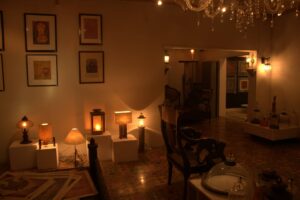
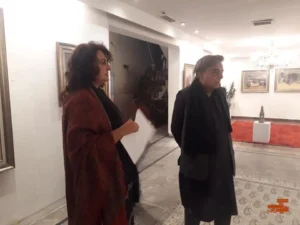
Today, visitors who walk into Nairang Gallery encounter paintings, sculptures, and creative expressions from contemporary artists. But behind these exhibitions lies a deeper cultural memory — the evenings when poetry was recited, manuscripts discussed, and friendships strengthened through conversation.
The story of Nairang Baithak reminds us that cultural spaces often begin not with grand plans but with simple gatherings of thoughtful people. From those gatherings emerge traditions, institutions, and creative communities that continue to shape the artistic life of a city.
In that sense, Nairang remains what it has always been — a place where art, literature, and conversation meet, and where the spirit of Lahore’s cultural heritage quietly continues.