Some writers narrate events, while others preserve entire civilizations within the fragile architecture of memory. Intizar Hussain’s words did not merely describe a world—they mourned its passing. In the quiet cadence of his prose, one hears the echoes of lost towns, abandoned homes, fading traditions, and a subcontinent fractured by history. His literary voice remains one of the most profound meditations on migration, nostalgia, and the slow erosion of cultural identity in Urdu literature.
Early Life and the Wound of Migration
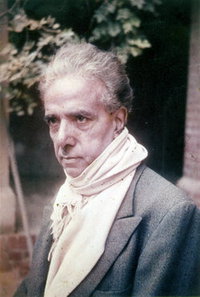
Born in Dibai, in the Bulandshahr district of British India, Intizar Hussain’s beginnings were rooted in a landscape that would later exist only in memory. Though official records often cite December 21, 1925, Hussain himself, with characteristic irony, suggested he may have been born a few years earlier—an uncertainty that subtly mirrors the fluidity of time in his own narratives.
He pursued higher education at Meerut College, where he completed his Master’s degree in Urdu literature. It was here that his literary sensibilities began to take shape, nourished by classical texts, folklore, and the philosophical undercurrents of Eastern storytelling traditions.
Then came 1947—the defining rupture forced millions to leave behind not just homes but entire histories. Hussain migrated with him an invisible archive of memories. This migration was not merely geographical; it became the central emotional and philosophical axis of his entire body of work.
A Literary Career Rooted in Memory and Myth
Spanning over seven decades, Intizar Hussain’s literary career was remarkably diverse. He worked as a journalist and columnist, yet it was in fiction that he found his truest expression. His narratives resist linear time; they move instead like memory itself—circling, fragmenting, and returning.
What distinguished Hussain from many of his contemporaries was his deep engagement with classical Eastern storytelling forms. Drawing from the rich traditions of dastan, parables, and fables, he created narratives that felt both ancient and startlingly modern. His stories often read like echoes from forgotten civilizations, layered with allegory and quiet despair.
Unlike many writers of his era, Hussain maintained a deliberate distance from ideological camps. He neither aligned himself closely with the Progressive Writers’ Movement nor with Halqa-e Arbab-e Zauq. Instead, his writing inhabited a deeply humanistic and philosophical space—concerned less with political rhetoric and more with existential loss.
Notable Works and Their Enduring Resonance
Among his many works, Basti (1979) stands as a towering achievement. It is not merely a novel but a meditation on time, history, and dislocation. Through its protagonist, Hussain explores the layered trauma of the subcontinent—where past and present blur into a continuous state of longing.
In Aage Samandar Hai (1995), he turns his gaze toward the violence and fragmentation of urban life in Karachi, juxtaposing it with the memory of lost Islamic civilizations such as al-Andalus. The novel becomes a reflection on decline—not just political, but spiritual and cultural.
Other significant works, including Shehr-e-Afsos, Khaali Pinjra, Chaand Gehan, and Aakhri Aadmi, further deepen his exploration of themes such as exile, decay, and the quiet disappearance of meaning in modern life.
Cultural Contribution and Literary Significance
Intizar Hussain’s contribution to Urdu literature lies not merely in the volume of his work but in its philosophical depth. He reintroduced a narrative mode that connected contemporary anxieties with ancient storytelling traditions. In doing so, he bridged the gap between past and present, myth and reality.
His recurring themes—nostalgia, loss of identity, and the erosion of cultural continuity—resonate profoundly in a world increasingly defined by displacement. He did not write about migration as an event; he wrote about it as a condition of being.
In his universe, cities are not just physical spaces but emotional landscapes. Villages fade into memory, and time itself becomes unreliable. This unique narrative approach has influenced generations of writers and continues to shape discussions around post-Partition literature.
Connection with Lahore and the Spirit of Nairang Baithak
Lahore, the city that became his home after migration, is inseparable from Intizar Hussain’s literary identity. It is here that his memories found form, where his reflections deepened, and where his voice matured into one of the most distinctive in Urdu literature.
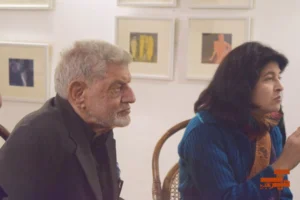
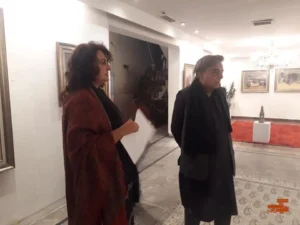
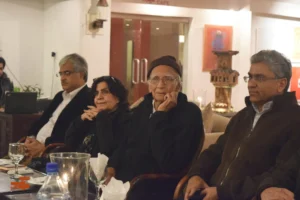
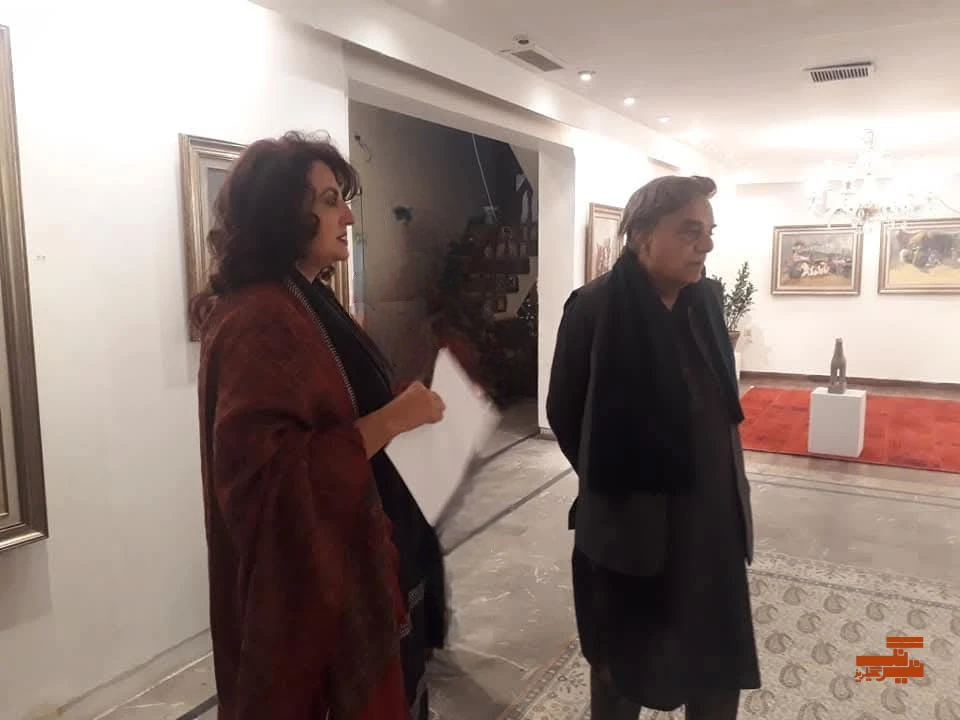
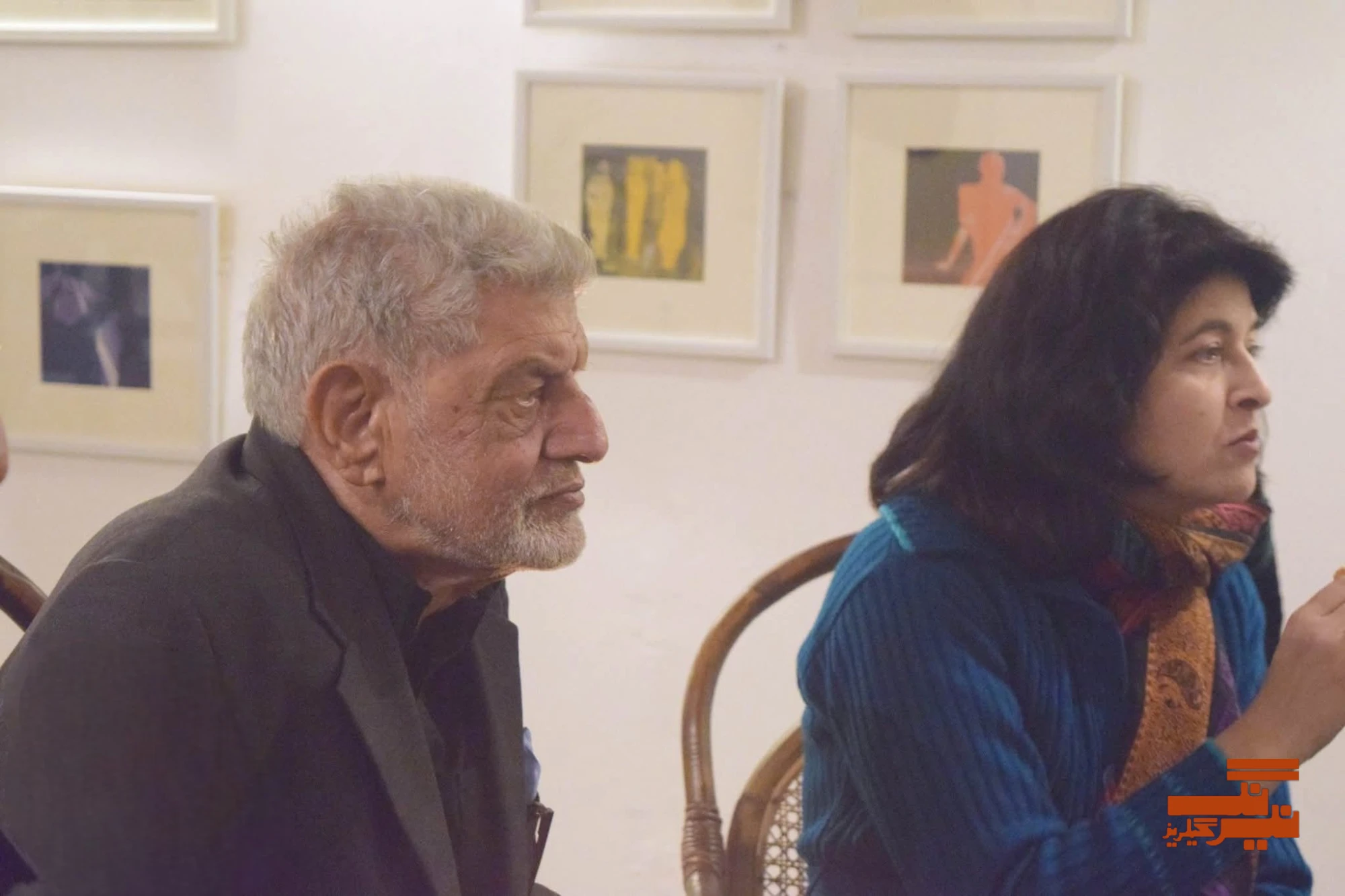
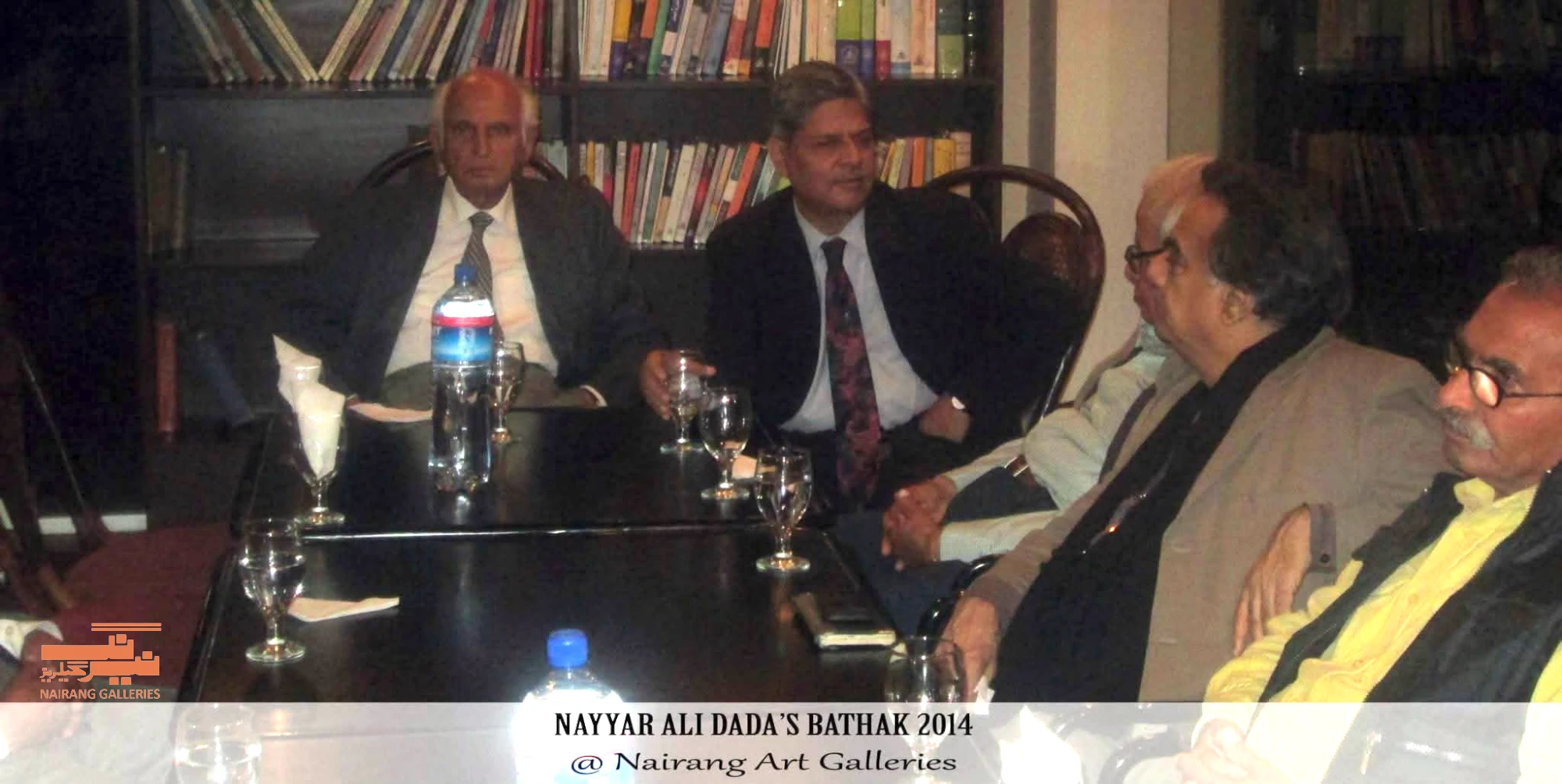
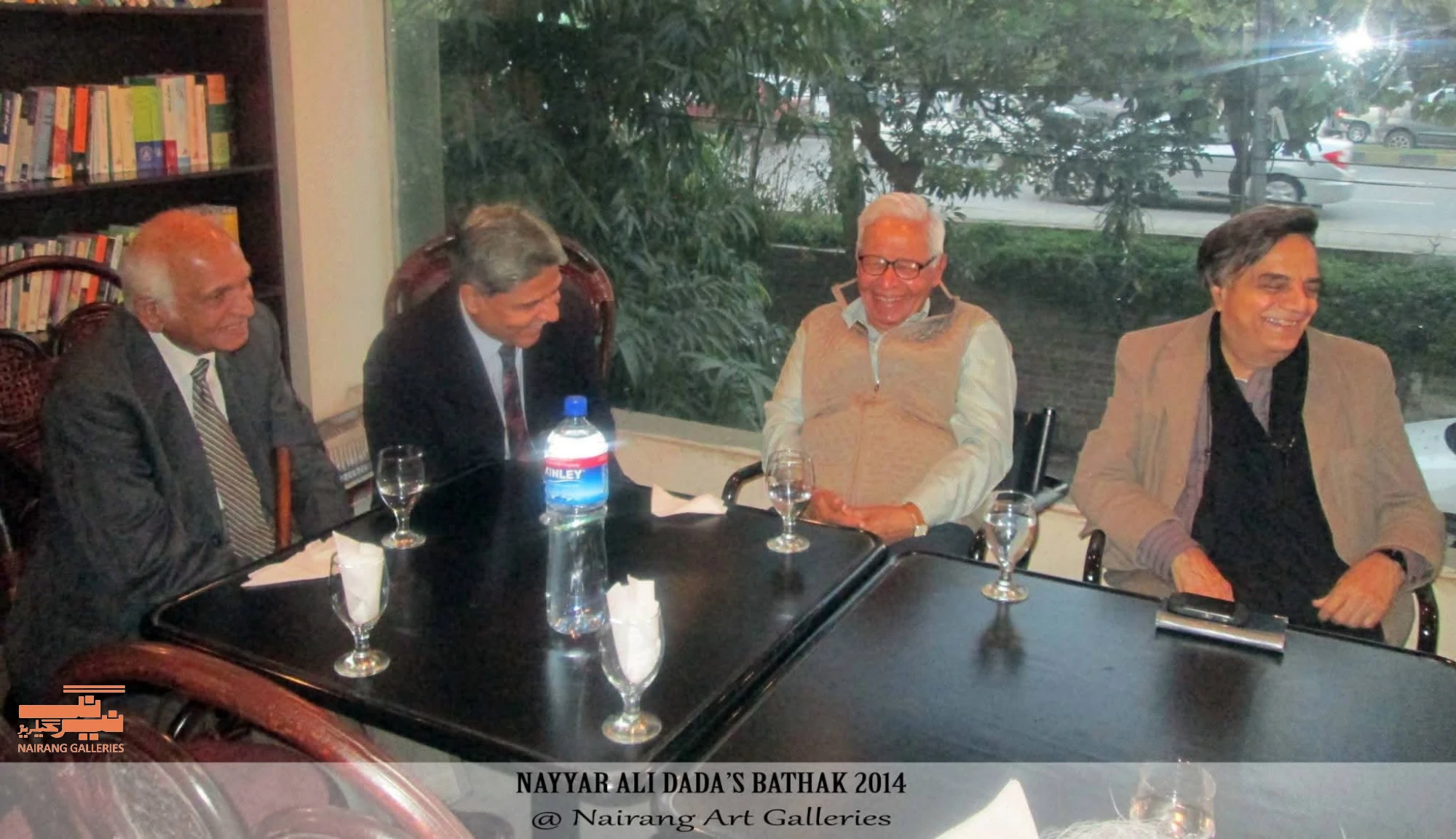
The cultural ethos of Lahore—its literary gatherings, intellectual debates, and artistic circles—provided a fertile ground for Hussain’s ideas. Spaces like Nairang Baithak have long been custodians of this tradition, where literature is not merely discussed but lived.
Though Intizar Hussain belonged to a generation shaped by displacement, his presence in Lahore’s literary culture connected him with institutions and spaces that continue to preserve and celebrate that legacy. In this sense, his spirit remains intertwined with the cultural rhythm that Nairang Gallery seeks to uphold.
A Writer Beyond Time
To read Intizar Hussain is to step into a world where time folds in on itself. The past is never truly past; it lingers, resurfaces, and reshapes the present. His work resists closure, much like the unresolved histories he wrote about.
In an age increasingly driven by immediacy, Hussain’s writing demands patience. It asks the reader to listen to silences, to pauses, to what is left unsaid. His narratives are less about answers and more about the persistence of questions.
Remembrance: The End of an Era
On February 2, 2016, Intizar Hussain passed away in Lahore after contracting pneumonia. His death was widely described as the “end of an era”—a phrase often overused, yet in this case, profoundly accurate.
He was not just a writer; he was a custodian of memory. With his passing, Urdu literature lost a voice that had quietly chronicled the emotional and cultural aftermath of one of history’s greatest upheavals.
Nairang Gallery Tribute
At Nairang Gallery, the legacy of Intizar Hussain is not confined to the pages of books—it lives in the conversations, the gatherings, and the shared cultural memory that continues to shape Lahore’s artistic identity.
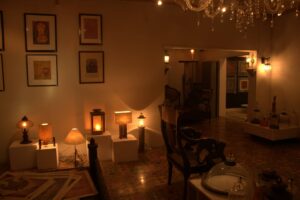
Nairang Baithak, in particular, stands as a reflection of the very world Hussain wrote about—a space where literature, art, and memory intersect. It is here that the echoes of writers like him find continuity, where stories are not only remembered but reimagined.
In honoring Intizar Hussain, Nairang Gallery reaffirms its commitment to preserving the literary and cultural traditions of Lahore. His work reminds us that art is not merely creation—it is preservation, resistance, and remembrance.
Conclusion
Intizar Hussain’s writing endures because it speaks to something universal—the human longing for belonging in a world defined by change. His stories remind us that while places may be lost, they continue to exist in memory, in language, and in the fragile yet enduring act of storytelling.
In the quiet corners of Lahore, in the conversations of literary gatherings, and in the reflective spaces of institutions like Nairang Gallery, his presence still lingers—like a story that refuses to end.