There are voices one recognizes instantly—not because they are loud, but because they carry a certain clarity. Faryal Gohar has long been associated with such a voice. Whether on screen, in writing, or in public conversation, it does not rush forward. It arrives with a sense of thought already lived through.
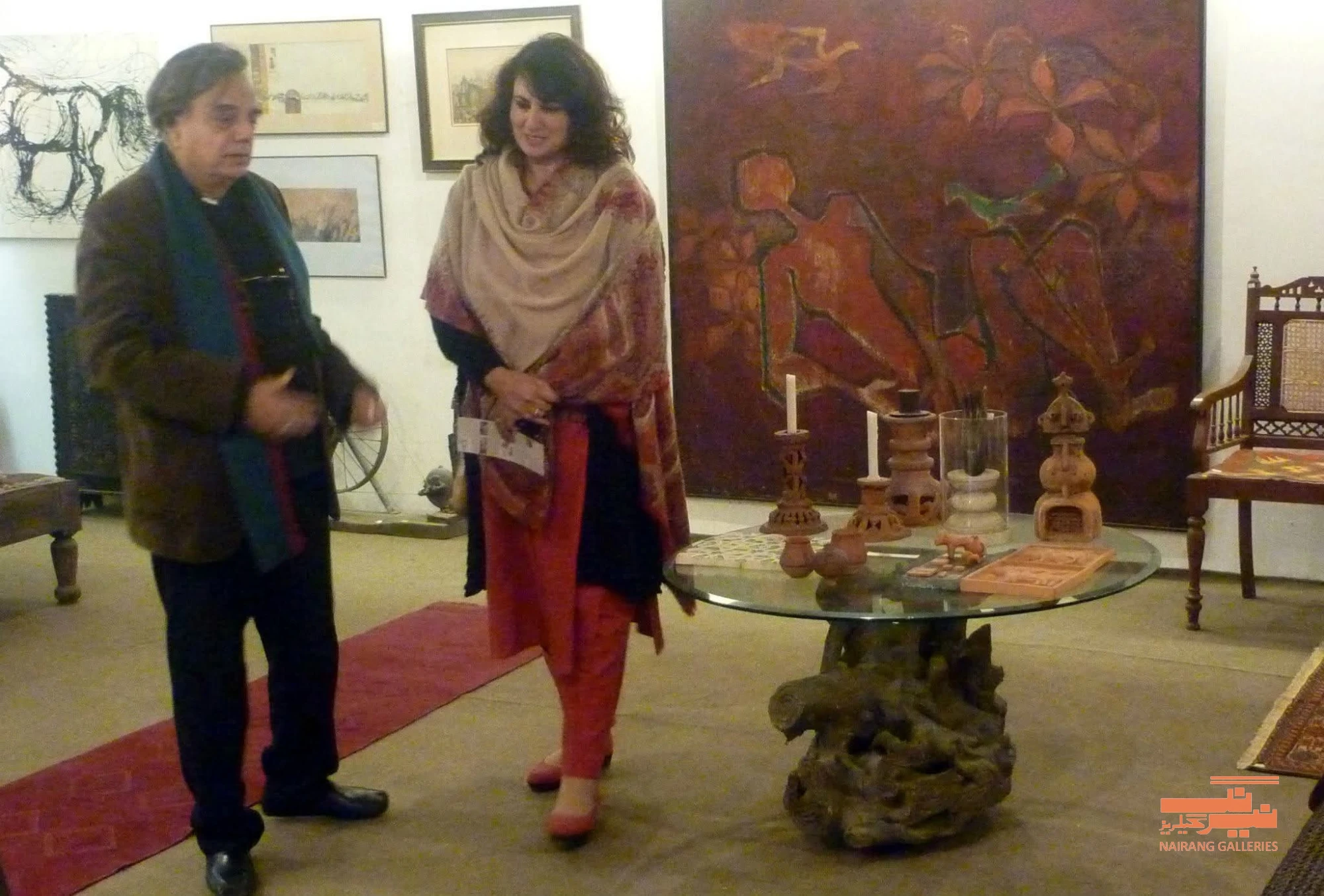
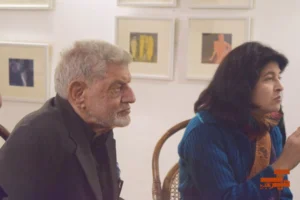
Image Credit: Nairang Archives c.2011
Work That Moves Across Mediums
To speak of her only as an actor would be incomplete. Her work across television, literature, and cultural engagement places her in a space that is not easily defined by a single role. There is a continuity in what she does—a thread that connects performance with reflection, and expression with responsibility.
For many, her presence first became familiar through television. These were not simply roles performed for visibility; they were part of a larger moment in television where writing, direction, and acting came together with unusual coherence.
Yet her work did not remain confined to performance. Over time, she moved into writing and public discourse, contributing columns and essays that reflected a concern for society, culture, and the responsibilities that come with a public voice. Her association with international organizations such as UNICEF further extended this engagement into areas of social awareness and advocacy.
The Measure of a Voice
There is a noticeable restraint in the way she expresses herself. Whether speaking or writing, she does not rely on excess. The sentences are clear, often direct, but never hurried.
This restraint does not reduce impact—it sharpens it. In an environment where visibility often depends on amplification, she maintains a different rhythm. One where words are allowed to carry their own weight, without being pushed toward effect.
It is perhaps this quality that allows her voice to move across different spaces—screen, page, and conversation—without losing its character.
Lahore and Its Cultural Continuity
Lahore has long been a meeting ground for different forms of expression. Theatre, literature, television, and informal gatherings often overlap here, creating a cultural continuity that is not always visible but deeply felt.
Within this landscape, Faryal Gohar’s presence aligns naturally. She belongs to that segment of the city’s cultural life where art is not separated from thought, and where public figures are still expected to engage with ideas beyond their immediate field.
Her work reflects this environment—not directly, not descriptively, but in the way it holds together multiple concerns without forcing them into a single narrative.
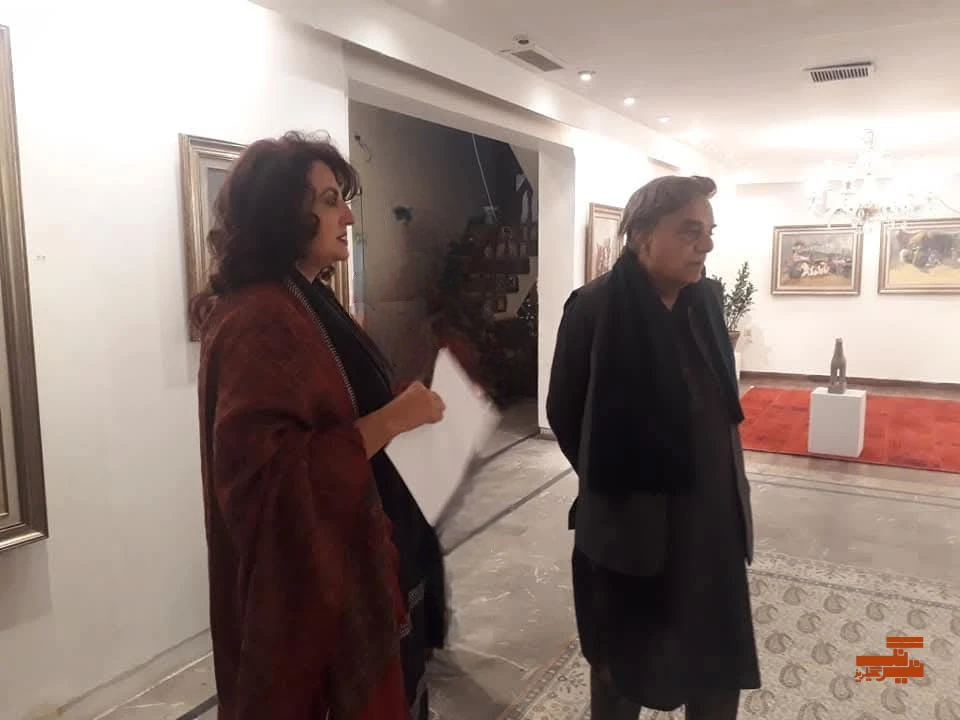
At Nairang Baithak
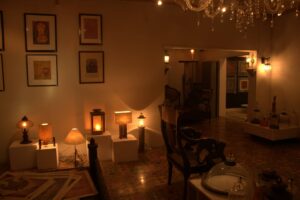
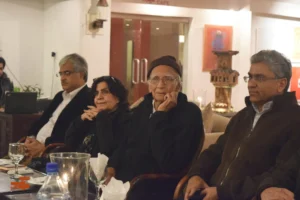
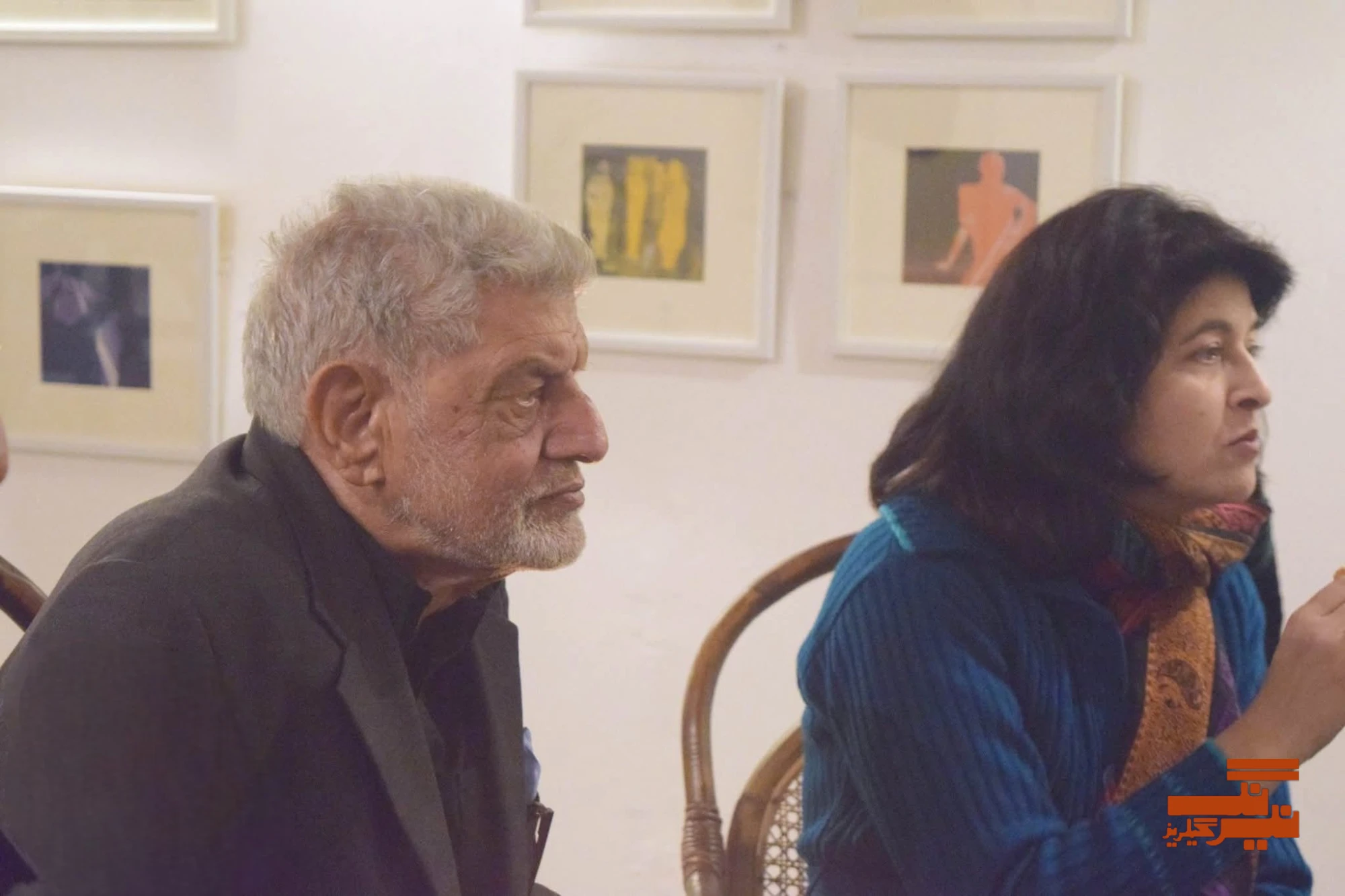
In the setting of Nairang Baithak, where the emphasis is less on performance and more on exchange, her presence does not require adjustment. She does not enter as someone to be introduced or framed. She becomes part of the ongoing conversation.
What stands out is not the frequency of her speech, but the attention she gives to others. There is no visible effort to guide or dominate the discussion. Instead, she allows it to unfold, contributing when necessary, and stepping back when the moment does not require her voice.
This is not a withdrawal. It is a form of participation that respects the collective nature of the space.
Between Public Role and Private Thought
Public figures often carry the expectation of constant articulation—to respond, to react, to remain visible. What distinguishes her approach is a certain selectiveness.
She does not speak at every moment. And when she does, it is rarely impulsive. This creates a different relationship with the audience—one that is not built on frequency, but on trust.
In her writing, this appears as clarity without simplification. In her spoken presence, it appears as composure without distance.
Refusing the Immediate
There is a growing tendency in contemporary discourse toward immediacy—quick responses, clear positions, instant conclusions. Against this, her way of engaging feels deliberately slower.
She does not reduce complexity for the sake of clarity. Instead, she allows it to remain visible. This does not make her work obscure. It makes it honest.
It acknowledges that not every issue resolves cleanly, and not every experience can be contained within a single perspective.
A Presence That Extends
Her contribution can’t be fully understood just by her roles, appearances, and affiliations, which only reveal what is visible. There’s a deeper layer—less documented but equally genuine—that shows in the subtle shifts in conversations when approached thoughtfully, in a public voice that remains considerate without becoming detached, and in artistic practice that integrates social awareness without compromising its integrity. Her influence persists beyond her individual works, woven into the broader fabric of cultural life.
A Closing Reflection
Some individuals are remembered through specific works. Others, through the continuity of what they bring into different spaces.
Faryal Gohar belongs to the second kind. Her work does not insist on a single identity. It moves—between performance, writing, and public engagement—without losing its center.
And in spaces like Nairang, where conversation is still allowed to unfold without urgency, such a presence does not stand apart. It becomes part of the rhythm itself.
Frequently Asked Questions
Who is Faryal Gohar?
Faryal Gohar is a Pakistani actress, writer, and cultural figure known for her work in television, public discourse, and development communication. She is also recognized for her thoughtful engagement in literary and cultural spaces in Lahore.
What is Nairang Baithak?
Nairang Baithak is a cultural and literary gathering hosted by Nairang Gallery in Lahore, where writers, artists, and intellectuals come together for informal discussions, readings, and exchanges of ideas.
What is Faryal Gohar’s connection with Nairang Baithak?
Faryal Gohar has been part of Nairang Baithak gatherings, contributing to its conversational and reflective environment through her presence and engagement in discussions.
Why is Lahore important in Pakistan’s literary culture?
Lahore has historically been a center for literature, arts, and intellectual exchange in Pakistan. It continues to host gatherings, institutions, and cultural spaces that sustain literary traditions.
What makes Nairang Gallery significant?
Nairang Gallery is one of Lahore’s important cultural spaces, known for promoting art, literature, and intellectual dialogue through exhibitions, events, and literary gatherings like Nairang Baithak.