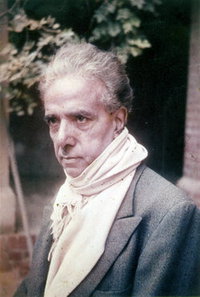
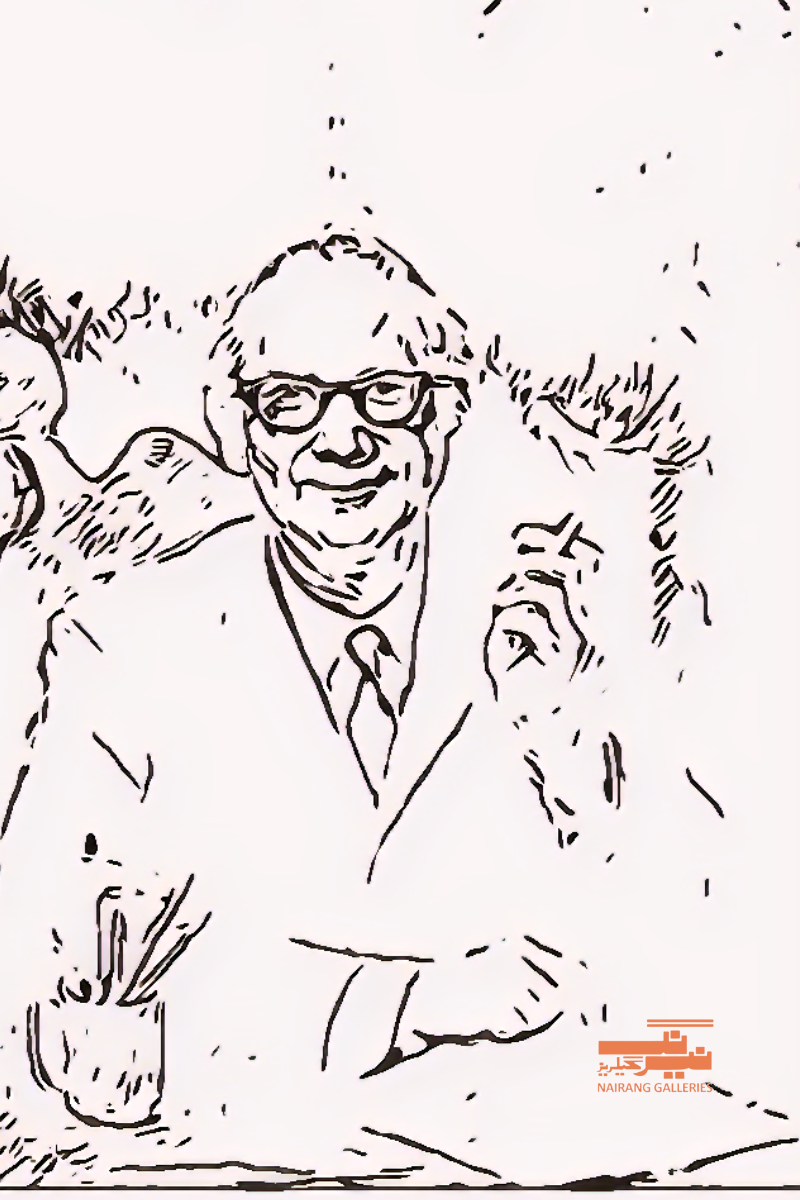
Some artists paint what they see, and then some paint what remains after seeing is no longer enough. Shakir Ali belonged to the latter. In his presence, conversation often softened into pauses, and in those pauses, one sensed the quiet intensity of a mind always in search—not of answers, but of form, of balance, of something just beyond articulation.
A Life Lived in Restraint
There was nothing excessive about Shakir Ali. Even in his manner, there was a kind of deliberate restraint—as if he had already removed everything unnecessary, not just from his canvas, but from himself. He did not speak to impress, nor did he create to decorate. His work felt like an inward journey, one that asked for patience rather than applause.
Those who encountered him often remember not a dominating personality, but a quiet presence—measured, attentive, and deeply absorbed in the act of looking. It was this act of looking, of truly seeing, that shaped everything he created.
Lahore: A City Reimagined in Form
Lahore was more than a place for Shakir Ali; it was a landscape of evolving meaning. Its old walls, its fading textures, its shifting light—these did not appear directly in his work, yet they existed within it, transformed into lines, shapes, and color fields that carried an unmistakable sense of place.
He did not paint the city as it was. He distilled it. Reduced it. Reimagined it. In his canvases, Lahore became something quieter, more essential—a memory rather than a description.
The Language of Form
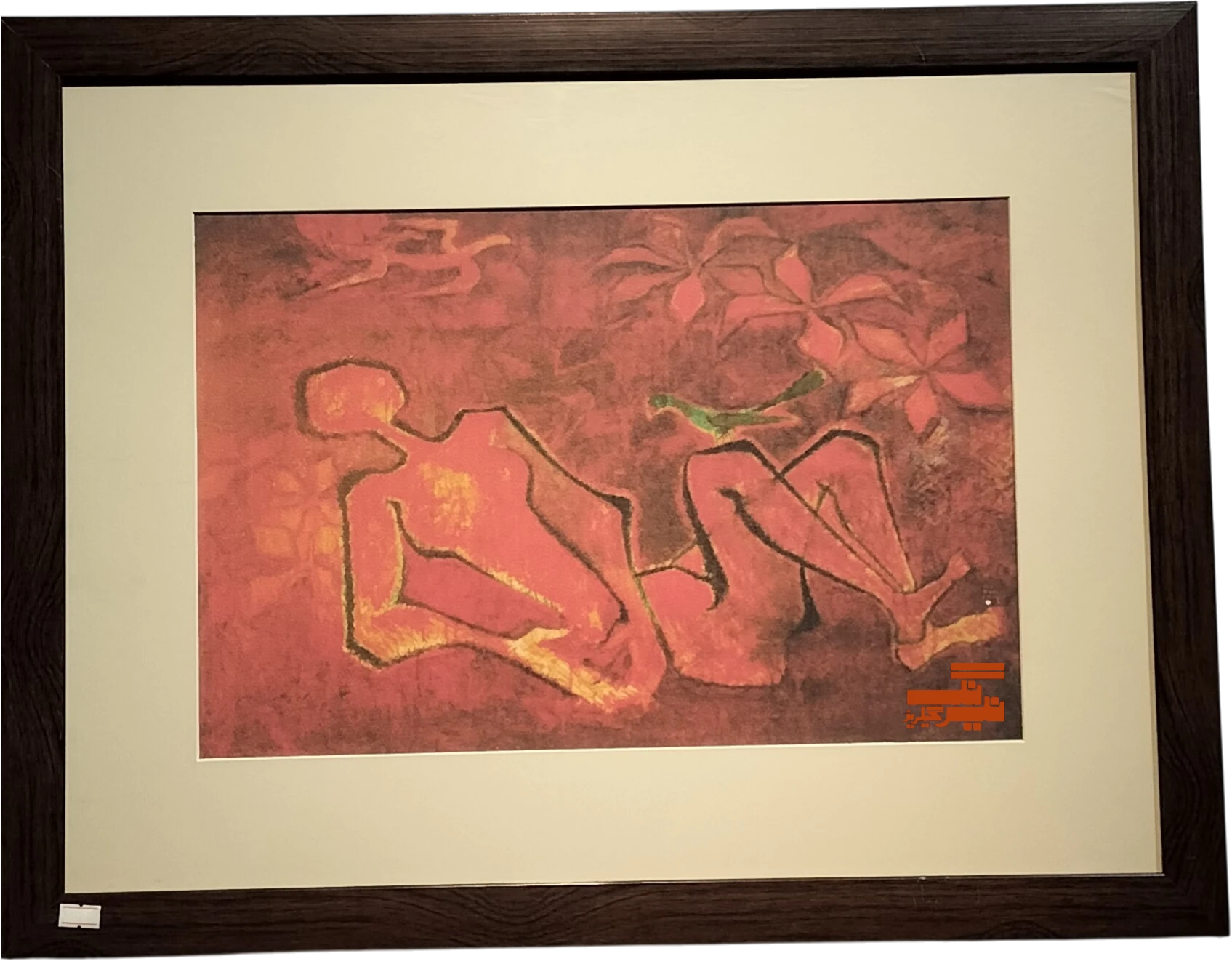
To stand before a work by Shakir Ali is to enter a space where narrative dissolves. There are no obvious stories, no direct references—only form, color, and a certain rhythm that feels both deliberate and elusive.
His art does not demand interpretation; it resists it. Instead, it asks the viewer to slow down, to let go of certainty, and to experience the work as one might experience silence—not empty, but full of possibility.
In an age increasingly drawn to clarity and immediacy, his work remains quietly defiant. It reminds us that meaning is not always given; sometimes, it must be felt.
Remembering the Artist, Not the Image
After his passing, much was said about his contribution to modern art, his influence, and his legacy. And yet, to remember Shakir Ali solely through these words feels incomplete.
He is remembered in quieter ways—in the discipline of a line drawn with care, in the decision to leave space rather than fill it, in the understanding that art is not about excess, but about essence.
He is remembered not only in galleries, but in the sensibilities he shaped, in the way artists began to see differently, to think differently, to trust silence as much as expression.
Nairang Gallery’s Tribute
At Nairang Gallery, the memory of Shakir Ali is not confined to history. It lives in the way art is approached—with thoughtfulness, with restraint, with a deep respect for process over display.
To remember him here is not merely to honor an artist, but to reaffirm a way of engaging with art—one that values depth over noise, presence over performance.
A Closing Reflection
There are artists whose work fills a space, and then there are those whose work creates space. Shakir Ali belonged to the latter.
In the measured silence of his compositions, in the restraint of his lines, and in the quiet dignity of his presence, he left behind something rare—a reminder that sometimes, what is left unsaid is where the true meaning resides.
And in the quiet rooms of Lahore, in places where art is still felt before it is explained, that silence continues to speak.