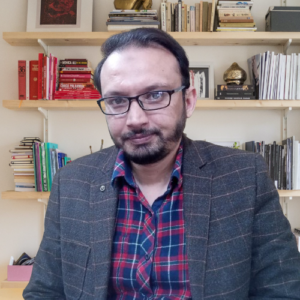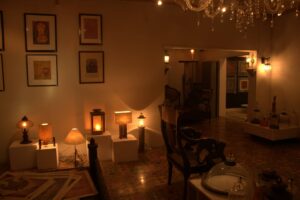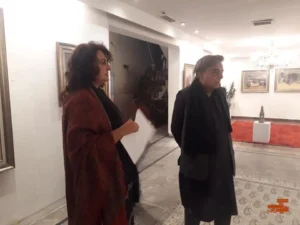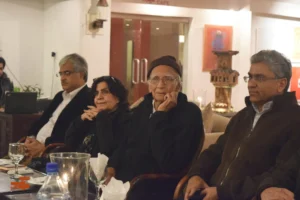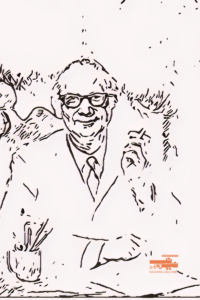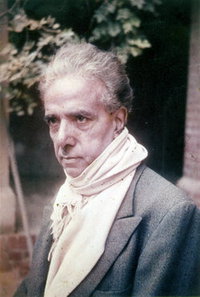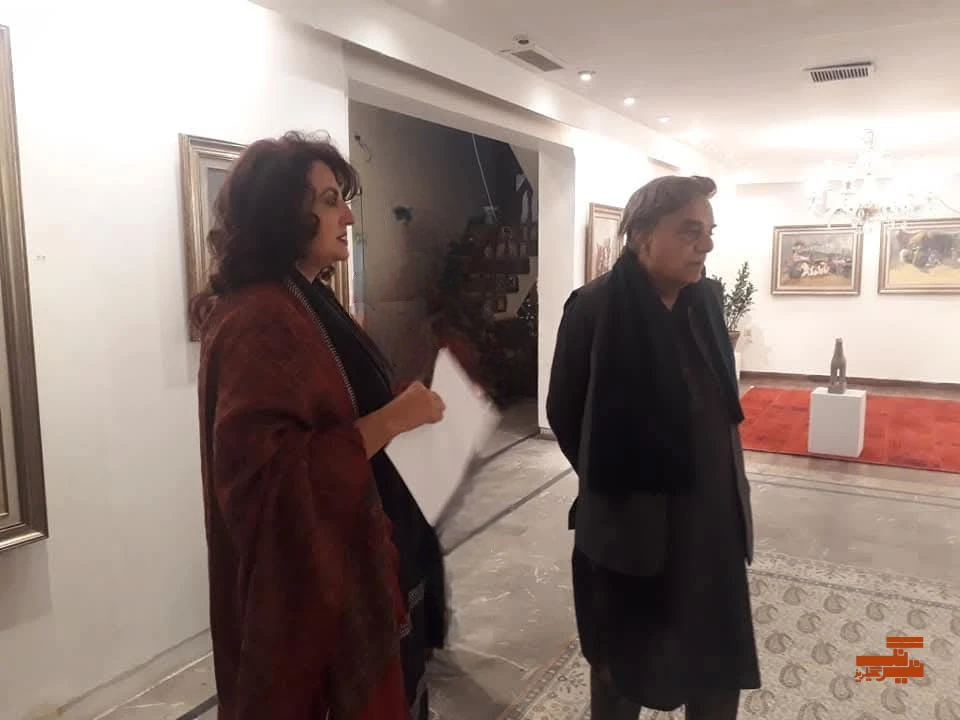
When one considers the cultural life in Lahore, the painter artist Saeed Akhtar is among those rare artists who have not only created images but are also keepers of atmosphere, memory, and temperament. His paintings, portraits, sketches and sculptural works belong to a tradition where they carry technique and feeling. To talk about Saeed Akhtar is to talk about a discipline that has found expression over the course of decades, a sensitivity of form and language between the observed and the imagined. For the Nairang Gallery itself, with its retrospective institutional memory of its role in Lahore’s conversations on art, literature, and aesthetics, to remember Saeed Akhtar is to preserve Lahore’s artistic conscience.
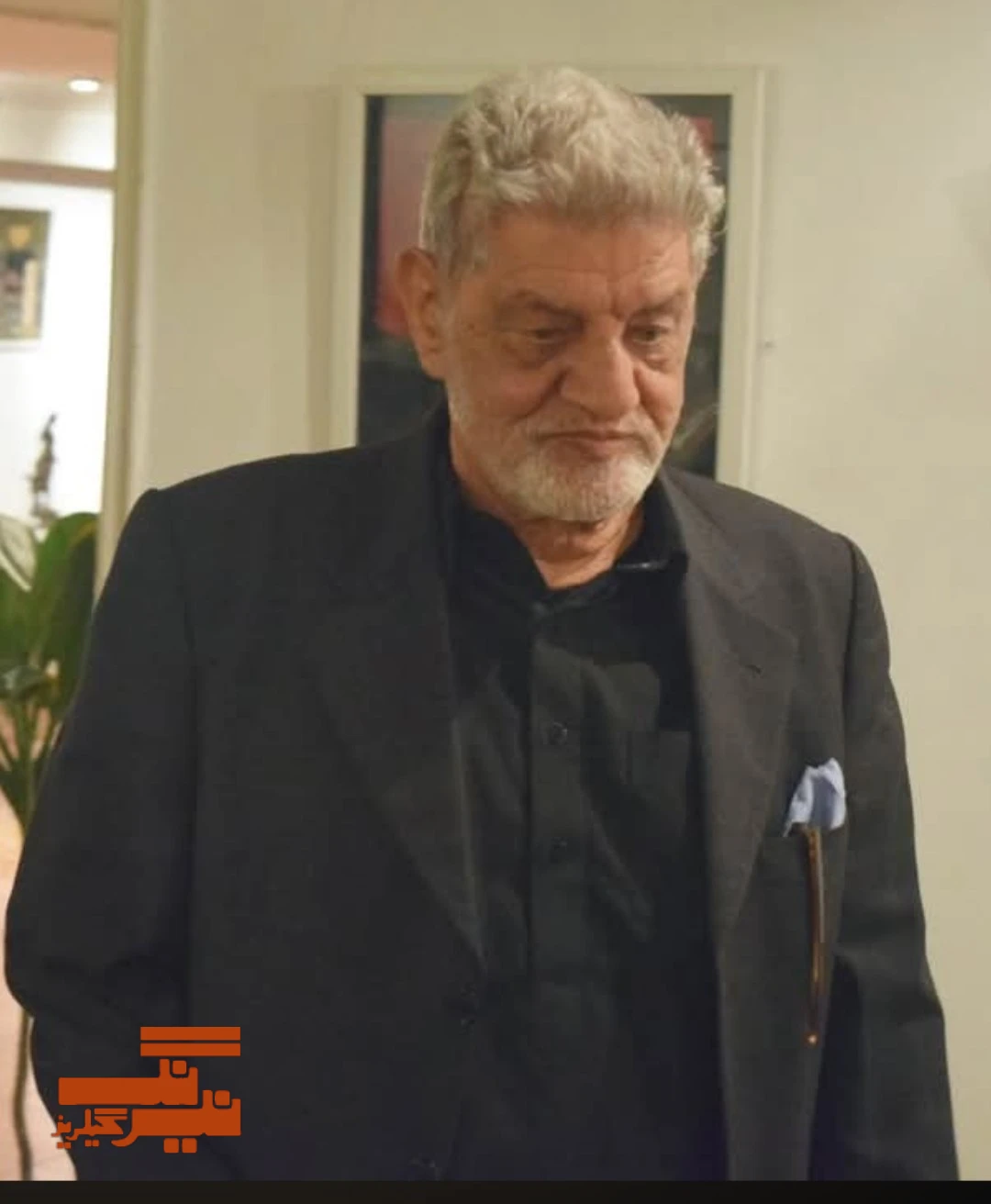
Image Credit: Nairang Archives C. 2016
Saeed Akhtar: an Artist of Memory
Lahore has historically been a city where the arts have spoken together. Its literary salons, print culture, music circles, galleries, and classrooms are all part of a tradition of an environment where the artist is not simply one who exists in isolation, but one who is immersed in a community that appreciates and animates his work (Dawn, 2026a). Lahore’s cultural venues and galleries, its Doctor of Strange cultural space of vision and memory, have continued this tradition in more recent years by creating spaces that foster conversation, exhibition, and recollection (Ahmed, 2022; Dawn, 20 11).
Saeed Akhtar is one of those rare artists whose work symbolises the cultural life of Lahore, of course. He is widely regarded as one of Pakistan’s finest contemporary visual artists. Saeed Akhtar is one of the master draftsmen and painters in the country, the artist with a special sensitivity of form, a masterful expression of emotional depth, and unquestionable confidence of technique who has seriously pursued his art and aesthetic over more than five decades ( Business Recorder, 2016; The News International, 2019).
Saeed Akhtar’s work stands at the intersection of technical mastery and emotional depth, shaping both personal portraiture and Pakistan’s wider visual memory.
A Life Shaped Through Practice
Like a work of art shaped through years of dedicated practice, Saeed Akhtar’s life embodies a sophisticated artistic sensibility that has deepened and matured over time. As a fellow of the National College of Arts, Lahore, he has honed his craft through quiet perseverance rather than theatrical gesture. His reputation stands firmly on his masterful command of drawing and painting, and on a rare sensitivity to form, texture, light, and colour — qualities that lend his work an immediate and lasting emotional resonance (Business Recorder, 2016; The News International, 2019)
He is what most observers call a man of diverse talents, a colourist, colourless draughtsman, portraitist, and sculptor. The significance of such a description is that the creative spirit cannot be restrained. All his media are merged: his black-and-white will show a different intimacy than his colour portraits; his sculpture and relief will show a different gravitas; yet there is always a common instinct: to bring the subject to life from inside. As the body and face are never simply anatomical – they carry the memory and moods of an inner weather or weather of the times (The News International, 2019).
Work
The News International adds that through exaggerated emphasis in contours, expressionistic face treatments, and contemplative atmospheres, Saeed Akhtar’s work moves “from real to surreal” (The News International, 2019). Such observation is gratefully heeded. The artist has not forgotten reality; he merely enhances it. Behind the face and body, he finds suggestion, not structure. His realism is an art of interpretation and not just imitation.
Cultural Contribution/Aesthetics
The account of Saeed Akhtar’s artistic contributions cannot ignore his public and national work of over three decades, which includes portraits of Quaid-e-Azam Muhammad Ali Jinnah for the most important state institutions, relief portraits for an official commemorative program, a painted mural on the history of the Pakistan Air Force, and a relief on the one-rupee coin issued in 1998. He also designed the “Pioneers of Freedom” postage stamp series commemorating the golden anniversary of the resolution of Pakistan, portrait busts, and reliefs for the Olympic Museum in Lahore (Business Recorder, 2016).
These marks prove him to be more than just a gallery artist. He has played a part in the creation of national visual memory. His portraits and reliefs have made their way into public space, official iconography, and civic symbolism. Saeed Akhtar’s art, therefore, shares intimate and collective histories: It can be housed in a sketchbook or in a nation’s ceremonial life.
But this is not all. His life’s work is not just in the commissions or the accolades. His greatest artistic boon lies in what he has done to the seen world. The News International wrote about his study of body language and facial expression as central to the life of his work (The News International, 2019). It is particularly valuable in a cultural climate in which portraiture swings between documentary likeness and decorative display. Akhtar has given a feeling of representation. He has breath to his figures because they are watched with care and then stylised.
Literary and Artistic Value
Saeed Akhtar is a visual artist, but his work is open to a mode of reading that most often belongs to literature. His images, like a short story or a reflective essay, are often characterized by their silence, implication, and emotional aftertaste. The language of elegy, with its economy of means and heightened nuance, is a useful point of reference, particularly for his monochrome drawings. Critics have noted the way he “deploys black, grey, and white to reduce form while preserving depth, atmosphere, and texture in the work” (The News International, 2019).
His economy of means has a poetic quality. In literature, one is impressed by a sentence that says more by saying less. In his work, something similar happens. A line becomes a gesture, a shadow becomes a thought – the body is simplified, the emotional field is expanded. Such work strongly resonates with Lahore’s vast heritage of poetry, conversation, and visual refinement.
South Asian art: Towards a nature of things
South Asian art has always been about the confluence of cultures. In Lahore, a city with an artistic pedigree, galleries are sites for exploring the convergence between inheritances and contemporary visions. Saeed Akhtar’s painting fits into this equation because it connects the disciplined mastery of hand with an emotional immediacy and with the grace of reachability. He is highly skilled.
Reflection and Remembrance
There are many artists whose work is technically admirable but who do not offer emotional immediacy. That is not the case with Saeed Akhtar. To view his work is to experience that the human face is important, that expressions are worth the work of creating, and that beauty can be more than decorative. His figures occupy a liminal space – seemingly still but looking inward. He reminds us that art can preserve presence as well as appearance.
Remembering him is remembering also his ethic of making. The ethic of everything that takes long, of careful observation, of reverence for medium and material. In an era that increasingly celebrates novelty, speed, and distraction, Saeed Akhtar’s career reminds us that depth is a cumulative act, that mastery is a patient process, and that style is the result of years of fidelity.
The pride of performance and Sitara-e-Imtiaz (Business Recorder, 2016; The News International, 2019) are indicators of one form of public recognition for this life-long work. But the greatest form is perhaps un-recognition – that instead of being a curiously exotic appeal, Pakistani art is continuous and serious and graceful. Hanif Chaudhry.
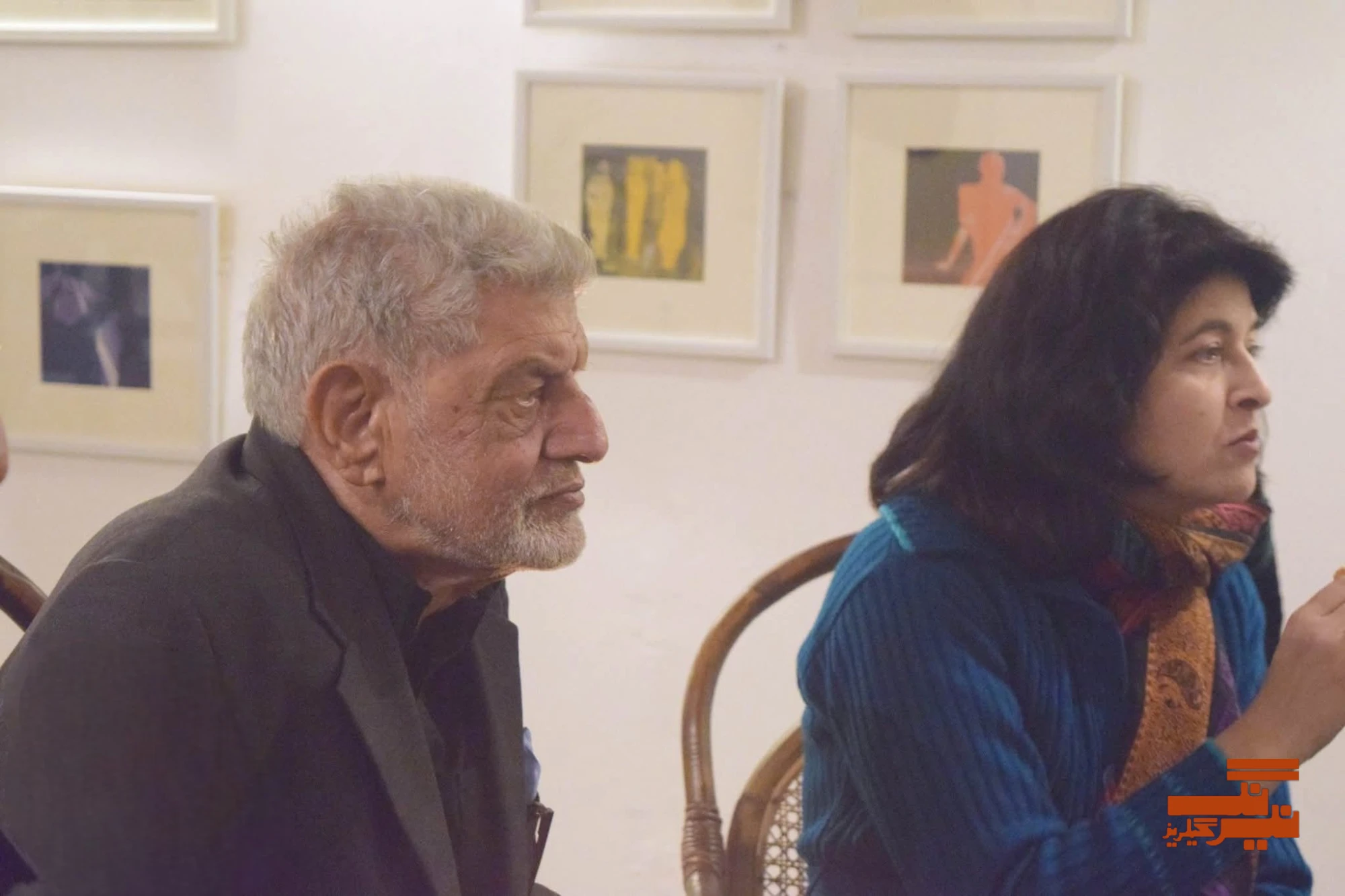
Image Credit: Nairang Archives, 2016
Nairang Gallery tribute: Saeed Akhtar in Lahore’s cultural memory
On the Asian Art Review: Nairang Gallery and Saeed Akhtar: a tribute
To Nairang Gallery Lahore, a tribute to Saeed Akhtar is a gesture of salutation based on the monumentality and gravity of his art. Nairang has been more than a gallery; it has been a haven for music, literature, art, and thought.
Founded by Nayyar Ali Dada, it has been a modern-day cultural salon where he has been organizing exhibitions, discussions, and literary sessions that reflect the older Lahore tradition of intellectual meetings (Ahmed, 2022). It has been open to artists, writers, and visitors to the aesthetic encounter. So, it belongs to the same civilizational impulse that sustained Lahore as a city of discourse
Dawn has described Nairang as a venue that hosted hundreds of exhibitions and was a place where artists, writers, and lovers of culture, including literary figures who were part of Lahore’s reflective life, could come and gather (Ahmed, 2022). Such places are vital to protect continuity- to keep art from becoming just commerce, or just visibility, but rather at the crossroads of the conversation, memory and community.
To Nairang Gallery give tribute to Saeed Akhtar means, therefore, to combine two interrelated histories, the history of one master artist, and that of an institution in Lahore that keeps alive a culture of staying involved in the artistic conversation. Akhtar’s work is the kind that belongs in the company of these cultural presences that give Lahore its inward distinction, not just fame, but atmosphere.
A tribute to Saeed Akhtar by Nairang Gallery, hence, is not just a homage, but a statement too. It says that Lahore still knows its artists, still cares about refinement, and still has places where painting, literature, memory, and public culture can become one. In remembering him, it signals the place that Nairang itself has within Lahore’s artistic heritage.
Conclusion
Saeed Akhtar is one of the names that is still meaningful in Pakistani visual arts because his work demonstrates that of a master of both accomplishment and emotional integrity. His portraits, sketches, paintings, and sculptural works show a towering technical competence, but more importantly, they reflect an artist who was keenly sensitive to the expressive integrity of the human subject. His public commissions have helped shape national iconography, while his studio practice enriched the more intimate modes of the art.
In the context of Lahore’s larger cultural world, its writing life, its galleries, its music rooms, and its circles of second thought, he is a man of continuity. His art reminds us that it is not just that something can be put on show, but that it can be lived with, that it can be meditated with, and that it can be forgotten with.
For Nairang Gallery, the act of honoring Saeed Akhtar is nothing more than a continuation of and contribution to our broader efforts: to preserve Lahore’s artistic memory, and to honor those among us who have enriched its life through their work.
Ultimately, it is not that Saeed Akhtar painted well, or wonderfully, but that he connected us more deeply to a face, a form, a history, and to the inward music of line.
References
Ahmed, S. (2022, October 8). Nairang Gallery and Café: Is Lahore going to lose another space for ideas? Dawn. https://www.dawn.com/news/1713957
Business Recorder. (2016, January 17). Art facts: Saeed Akhtar – an iconic artist. https://www.brecorder.com/news/amp/4352721
Condé Nast Traveller Middle East. (2025). Lahore: Asia’s most underrated cultural capital. https://www.cntravellerme.com/story/lahore-asias-most-underrated-culture-capital
Dawn. (2011, April 27). Craft exhibition at Nairang Art Gallery. https://www.dawn.com/news/624412/craft-exhibition-at-nairang-art-gallery
Dawn. (2026, January 18). In Spectrum: Urdu press and Lahore’s literary culture. https://www.dawn.com/news/1967536
The News International. (2019, May 5). Into master artist Saeed Akhtar’s ethereal world. https://www.thenews.com.pk/latest/471279-into-master-artist-saeed-akhtars-ethereal-world
Frequently Asked Questions
Who is Saeed Akhtar?
Saeed Akhtar is a leading Pakistani painter and portrait artist, widely recognized for his mastery of drawing, emotional depth, and contribution to both public and studio art practices.
What is Saeed Akhtar known for?
He is known for his refined portraiture, expressive line work, and ability to bring psychological depth and presence into the human figure across painting, drawing, and sculpture.
How has Saeed Akhtar contributed to Pakistan’s visual culture?
His work extends beyond galleries into national visual memory through public commissions, portraits of historical figures, and contributions to civic and institutional art.
What makes Saeed Akhtar’s style distinctive?
His work combines technical precision with emotional sensitivity, often using minimal means to create depth, atmosphere, and a strong sense of human presence.
What is Saeed Akhtar’s connection to Lahore?
As a graduate and practitioner shaped within Lahore’s artistic environment, his work reflects the city’s long-standing dialogue between visual art, literature, and cultural thought.